
The shift to recurring on-chain revenue
The crypto economy is moving past the era of one-off NFT mints and speculative token flips. Creators and protocols are now building sustainable, recurring revenue streams through on-chain subscriptions. This shift relies on Bitcoin L2s and Ethereum infrastructure to automate payments without the friction that previously killed retention.
Early attempts at recurring crypto payments often failed because they required complex user actions: wrapping tokens, managing escrow, or interacting with relayer networks. These steps created too much friction for the average user. Modern solutions, however, enable a "subscribe and forget" experience. By leveraging account abstraction and intent-based architectures, services can automatically renew access to content or tools, mirroring the convenience of traditional fiat subscriptions.
This transition is not just about convenience; it is about economic stability. Recurring revenue allows creators to plan long-term and provides protocols with predictable cash flow. As Bitcoin L2s mature and Ethereum improves its transaction throughput, the cost and speed of these micro-recurring transactions become viable for everyday use. The result is a new class of web3 businesses that are built to last, not just to pump.
Bitcoin L2 payments enable micro-subscriptions
The friction of on-chain pull payments has long blocked recurring revenue models on Bitcoin. Layer 2 networks solve this by offering the throughput needed for high-frequency billing without the prohibitive costs of the main chain. This shift transforms on-chain subscriptions from a theoretical concept into a viable economic reality.
Historically, merchants faced a binary choice: wait for slow, expensive mainnet settlements or rely on centralized off-chain processors that reintroduce trust assumptions. Layer 2s remove this compromise. By batching transactions off-chain and settling proofs on Bitcoin, they provide the speed and low fees required for micro-subscriptions. A user can now pay for a $0.10 daily service without worrying about gas fees exceeding the transaction value.
This infrastructure supports "subscribe and forget" experiences. Protocols built on these layers allow merchants to automate recurring charges directly from user wallets, eliminating the need for escrow, token wrapping, or complex relayer networks. The result is a true on-chain subscription model where the payment rails are as reliable as fiat systems but remain permissionless.
The economic feasibility is clear. When transaction costs drop to fractions of a cent, the barrier to entry for digital content, API access, and software licenses vanishes. Creators and developers can monetize small-scale, high-frequency usage patterns that were previously unprofitable to process.
DeFi primitives for recurring revenue
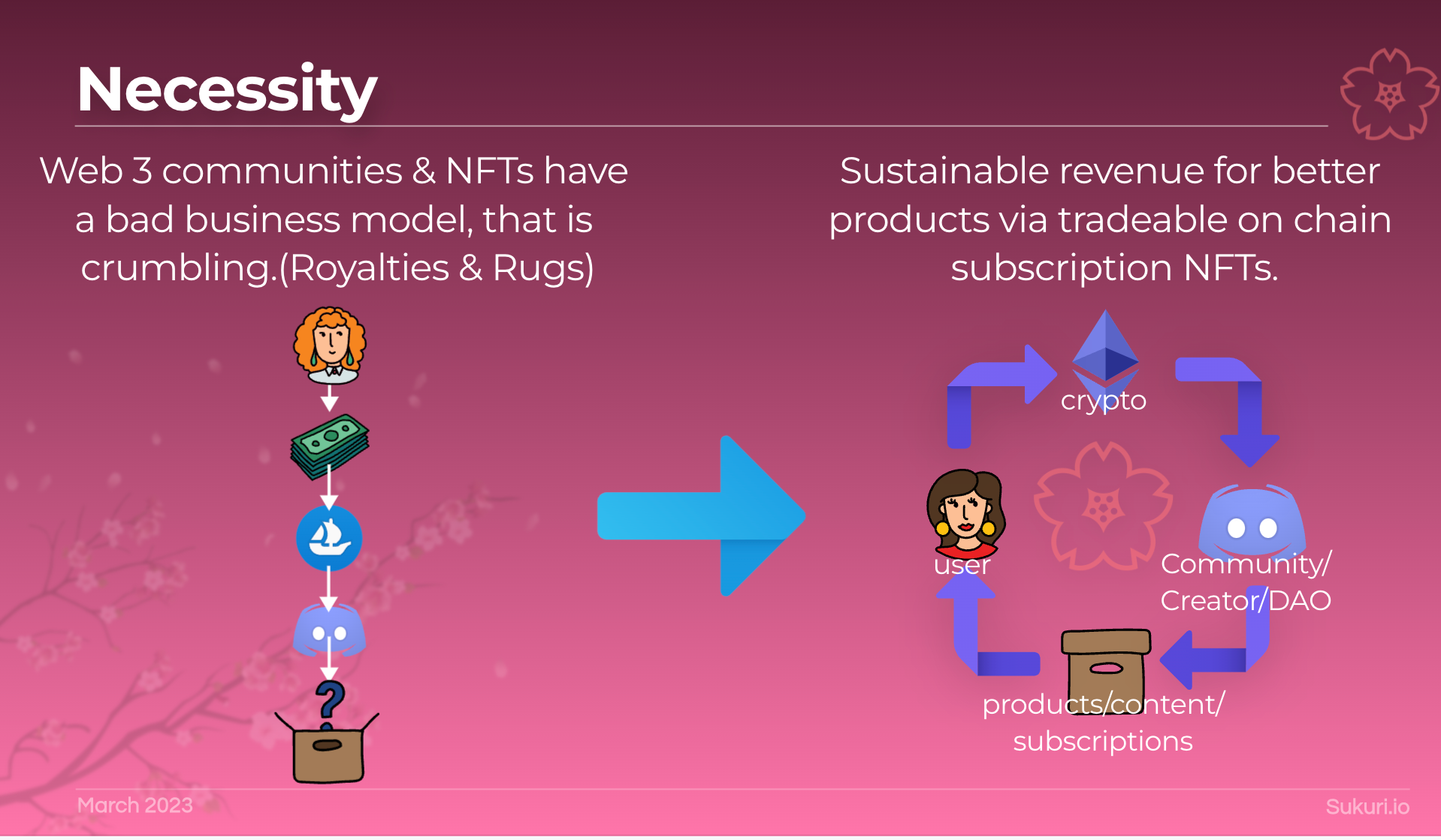
On-chain subscriptions are moving beyond simple token sales by leveraging DeFi primitives to automate renewals and manage access. Instead of relying on traditional escrow or manual processing, creators now use vaults, intents, and account abstraction (AA) to handle recurring payments seamlessly. This shift allows for trustless, programmable access rights that update automatically as long as the subscription is active.
Vault-based recurring payments
Vaults serve as the financial backbone for many on-chain subscription models. They hold the funds required for recurring payments and release them automatically at set intervals. This structure reduces friction for members and can lower churn rates by removing the need for manual renewals. Platforms like Unlock Protocol integrate these vaults to ensure that payments are secured and distributed without intermediaries.
Token-gated access and NFT passes
Access control is often managed through NFT passes or token-gated tiers. When a user holds the required token, they gain entry to exclusive content or communities. If the subscription lapses, the access rights are automatically revoked. This method ensures that only paying members retain access, creating a dynamic and self-regulating ecosystem for creators.
Account abstraction for seamless UX
Account abstraction (AA) wallets play a crucial role in improving the user experience for on-chain subscriptions. They allow for gasless transactions and batched payments, making the subscription process feel as smooth as traditional Web2 services. By abstracting away the complexities of blockchain interactions, AA enables creators to focus on content rather than technical hurdles.
Comparison: Web2 vs. On-Chain Models
The following table compares traditional Web2 subscription models with emerging on-chain alternatives, highlighting differences in cost, control, and automation.
| Model | Cost Structure | Control | Automation |
|---|---|---|---|
| Web2 (Stripe/Paddle) | 1.5-2.9% + fixed fee | Platform-dependent | Manual renewal management |
| On-Chain (Unlock/Sphere) | Network gas fees only | Creator-owned smart contracts | Automatic via smart contracts |
Stop the churn with automated on-chain flows
Most on-chain subscriptions fail because they feel like manual labor. If a subscriber has to sign a new transaction every month, they will forget, run out of gas, or lose interest. To keep recurring revenue stable, you must remove the friction between the user and the payment. The goal is to make on-chain subscriptions feel as effortless as a fiat credit card renewal.
Account Abstraction (ERC-4337) is the foundation of frictionless recurring payments. It allows smart contracts to pay transaction fees on behalf of the user and batch multiple operations into a single signature. This hides the complexity of gas and wallet management, letting users interact with subscriptions using familiar email or social logins. Without this layer, the user experience remains too clunky for mass adoption.

Separate the subscription cost from the transaction cost. Use a Paymaster contract to sponsor the gas fees for renewal transactions. This ensures that a user’s wallet balance is never depleted by network fees, preventing failed payments due to insufficient ETH or native tokens. The subscriber only needs to hold the asset being subscribed to, not the chain’s native currency for gas.
Replace manual monthly approvals with automated, signed renewal flows. Use session keys or smart contract allowances that automatically trigger the next payment cycle without requiring the user to open their wallet. This mirrors the "set it and forget it" nature of traditional SaaS billing, drastically reducing the cognitive load and the likelihood of accidental churn.
Automated flows still require a safety net. Configure smart contracts to allow a short grace period where the subscription remains active even if a renewal transaction fails. Pair this with automated off-chain notifications (email or push) to remind users to top up their wallets or approve the next cycle. This catches users before they drop off, preserving the recurring revenue stream.
By treating on-chain subscriptions like modern fintech products rather than raw blockchain interactions, you build a system where retention is handled by code, not by manual reminders. The technology is ready to support seamless, recurring crypto revenue if the user experience is prioritized.
On-chain subscriptions vs. off-chain alternatives
Choosing the right infrastructure depends on whether you prioritize trustlessness or speed. On-chain subscriptions settle directly on the blockchain, offering immutable proof of payment without intermediaries. This approach is ideal for high-value recurring revenue where transparency is paramount, though it often comes with higher latency and network fees.
Off-chain alternatives process payments through centralized ledgers or off-chain databases before settling on-chain. This model addresses scalability challenges by handling high-frequency micro-transactions off the main chain, reducing costs and improving user experience. It is better suited for high-volume, low-value subscriptions where speed matters more than immediate on-chain verification.
| Feature | On-Chain | Off-Chain |
|---|---|---|
| Settlement | Immediate on blockchain | Batched or delayed |
| Cost | Higher (gas/network fees) | Lower |
| Trust Model | Trustless (code-based) | Trust-based (provider-based) |
| Best For | High-value, transparent revenue | High-volume, low-cost subscriptions |
For most builders, the decision hinges on the subscription tier. Use on-chain infrastructure for premium, high-value recurring payments to leverage its security. For mass-market, low-cost subscriptions, off-chain processing provides the necessary efficiency without sacrificing the core benefits of crypto revenue.
Frequently asked questions about on-chain subscriptions
What are on-chain payments?
On-chain payments are transactions recorded directly on a blockchain’s main ledger. They offer a trustless transfer mechanism where security and immutability are paramount, eliminating the need for traditional financial intermediaries. This stands in contrast to off-chain transactions, which are designed to address scalability challenges but settle outside the primary chain.
What is an example of an on-chain subscription?
A clear example of an on-chain subscription is a protocol that enables merchants to offer a "subscribe and forget" model. As described by SpherePay, these solutions allow recurring payments without requiring escrow, token wrapping, or relayer networks, streamlining the user experience while maintaining on-chain verification.
How do on-chain subscriptions differ from traditional payments?
Traditional recurring payments rely on centralized payment processors and manual card renewals. On-chain subscriptions automate this process through smart contracts, ensuring that recurring fees are collected automatically without the friction of expired cards or manual intervention. This shift moves the control and execution directly onto the blockchain network.
No comments yet. Be the first to share your thoughts!