

In the fast-paced world of Solana recurring payments, handling onchain subscription proration mid-cycle shouldn't require wrestling with Rust smart contracts. With Binance-Peg SOL trading at $80.46 - down 2.59% in the last 24 hours - Solana's low fees and high throughput make it ideal for Web3 subscription billing. But traditional onchain proration often bloats programs with complex logic. Instead, savvy developers use off-chain monitoring to detect changes like upgrades or downgrades, calculate prorated onchain subscriptions, and adjust seamlessly. This approach cuts complexity while keeping everything verifiable on-chain.
Solana's ecosystem shines for SaaS tiers because transactions settle in milliseconds at fractions of a cent. Yet, proration - prorating fees for partial periods - trips up many. Users expect fairness: pay only for what they use. Without it, churn spikes. Data from similar blockchain setups shows blockchain proration can boost retention by 15-20% in subscription models. Platforms like SubscribeOnChain. com prove it's viable, but you don't need their full stack to start.
Why Off-Chain Beats Smart Contracts for Starter Proration
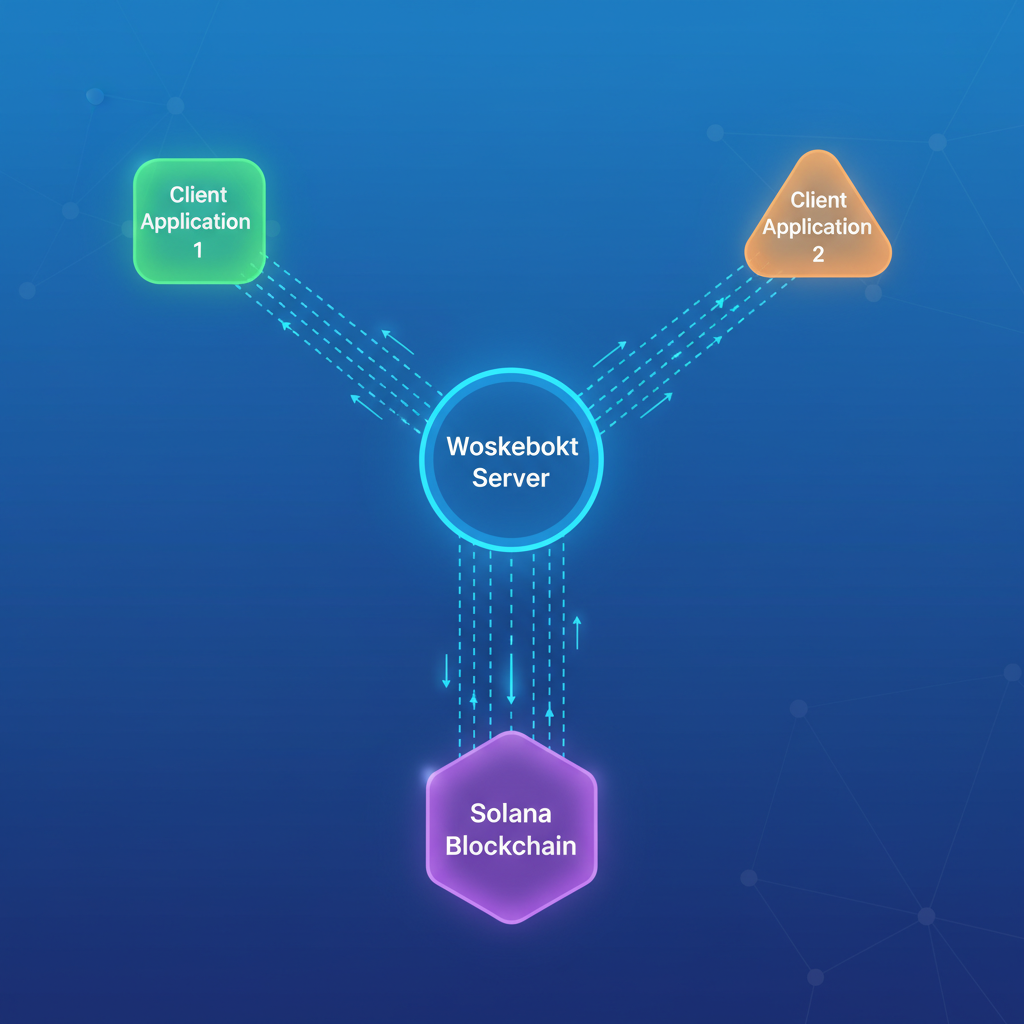
Smart contracts excel at determinism, but embedding proration means auditing time-based math, token math, and edge cases like leap seconds or network congestion. On Solana, programs hit compute limits fast with loops over histories. Off-chain services sidestep this: monitor via RPC, compute locally, then settle via simple transfers or instructions.
Take a SaaS dashboard: user upgrades from basic ($10/month) to pro ($50/month) on day 15. On-chain only? You'd need a program tracking start times, rates, and emitting credits. Off-chain? Watch the payment tx, prorate the remainder (half-month pro minus half basic), issue a micro-invoice. Solana's predictably low fees - under $0.01 even now with SOL at $80.46 - make frequent adjustments cheap.
Solana (SOL) Price Prediction 2027-2032
Forecasts from current $80.46 level in 2026, factoring in onchain subscription growth, enterprise adoption, and market cycles
| Year | Minimum Price | Average Price | Maximum Price | YoY % Change (Avg) |
|---|---|---|---|---|
| 2027 | $70.00 | $150.00 | $300.00 | +87.5% |
| 2028 | $120.00 | $300.00 | $600.00 | +100.0% |
| 2029 | $200.00 | $500.00 | $1,000.00 | +66.7% |
| 2030 | $350.00 | $800.00 | $1,500.00 | +60.0% |
| 2031 | $500.00 | $1,200.00 | $2,200.00 | +50.0% |
| 2032 | $700.00 | $1,700.00 | $3,000.00 | +41.7% |
Price Prediction Summary
Solana (SOL) is expected to experience substantial growth through 2032, with average prices climbing from $150 in 2027 to $1,700 by 2032—a 21x increase from 2026 levels. Bullish scenarios driven by ecosystem expansion in onchain subscriptions and enterprise use contrast with bearish risks from regulation and competition.
Key Factors Affecting Solana Price
- Advancements in onchain proration and subscriptions reducing smart contract complexity
- Enterprise adoption leveraging Solana's high TPS and low fees
- Crypto market cycles influenced by Bitcoin halvings
- Regulatory developments impacting L1 scalability solutions
- Technological upgrades minimizing network outages
- Competition from Ethereum L2s and other high-performance blockchains
- Growing market cap potential with DeFi, SaaS, and real-world use cases
Disclaimer: Cryptocurrency price predictions are speculative and based on current market analysis. Actual prices may vary significantly due to market volatility, regulatory changes, and other factors. Always do your own research before making investment decisions.
Real-Time Tracking with Solana's accountSubscribe WebSocket
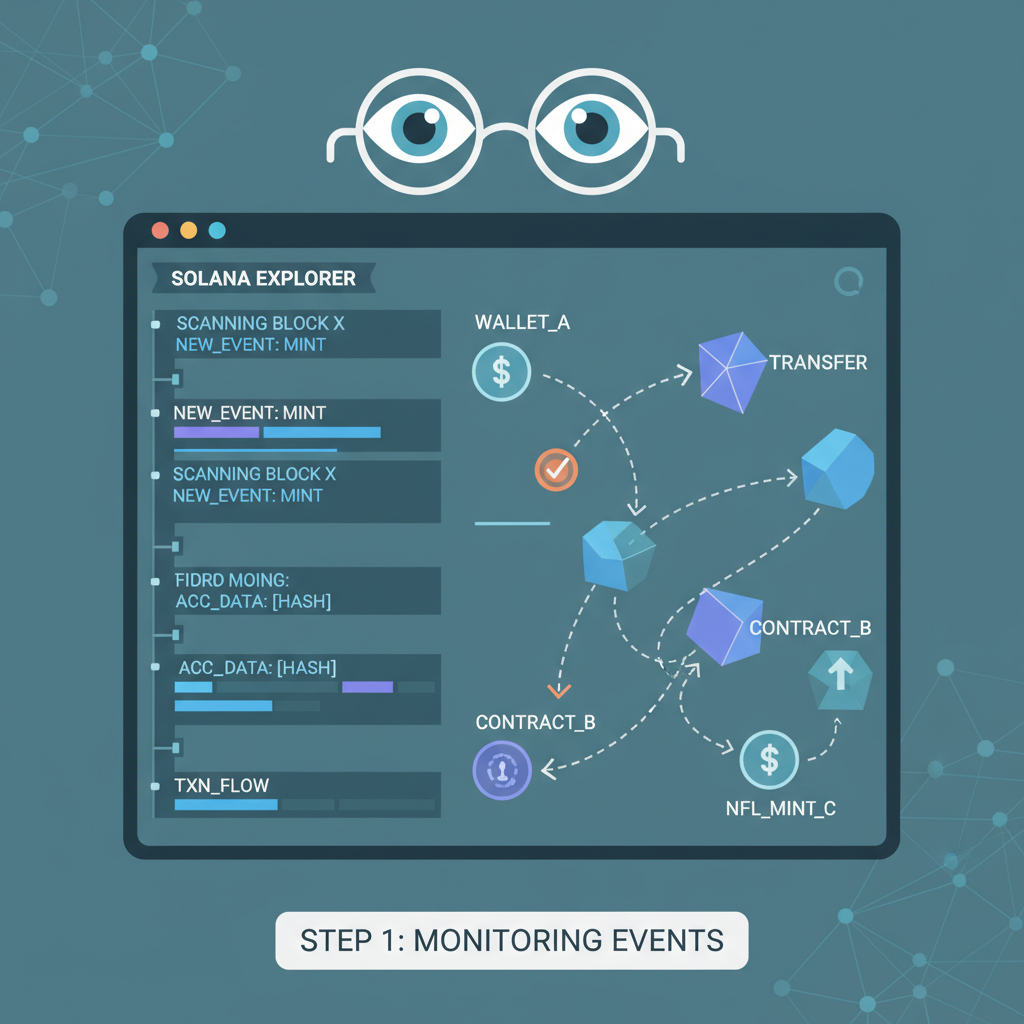
Core to this: Solana RPC's accountSubscribe. Subscribe to user token accounts or your vault. When a payment hits - say, via a subscription program's CPI - your Node. js or Rust backend gets notified instantly.
const connection = new Connection('https://api.mainnet-beta.solana.com'); const subscriptionId = connection. onAccountChange( userTokenAccountPubkey, (accountInfo) leads to {//Parse balance change, trigger proration } );This streams updates without polling, vital for Solana recurring payments. Pair with logsSubscribe for instruction details. Free tier RPCs handle thousands of subs; scale to Helius or QuickNode for production. Reliability? 99.9% uptime matches Solana's enterprise-grade speed.
Building the Proration Engine: Inputs and Calculations
Your off-chain service needs user state: subscription start, tier price, period end. Store minimally in Postgres or Redis, keyed by wallet pubkey. On event:
- Fetch tx details via
getTransaction. - Decode instruction: new tier detected.
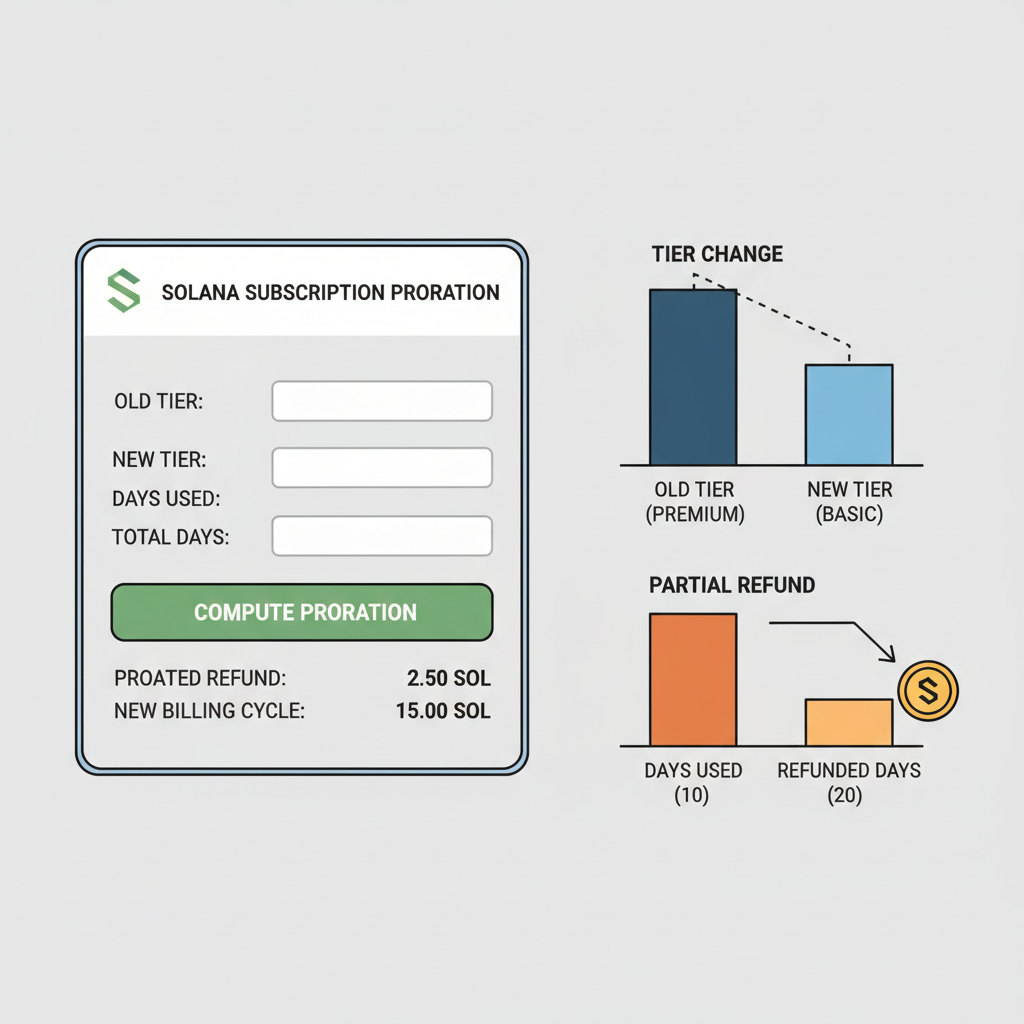
- Compute days used/remaining. Prorate:
(remaining_days/total_days) * new_price - used_adjustment. - Queue atomic swap or refund tx.
For refunds, use token transfers; for credits, extend expiry via a lightweight program. Example: user pays 1 SOL/month equivalent at $80.46 (~$80). Mid-month upgrade? Credit 0.5 SOL equivalent instantly. No over/undercharges.
Security matters: sign txs with a hot wallet, rate-limit, validate sigs. Third-parties like Zerion API add webhooks for zero-infra starts - subscribe addresses, get JSON payloads on txs. Trade-off: small centralization for speed.
Check this guide for baseline subscription setup before layering proration.
Scaling this for production means wiring in a queue like BullMQ or Kafka to handle event bursts - Solana pumps 65k TPS, but your subs won't. Test with Solana's devnet: simulate upgrades via CLI txs, verify proration math holds.
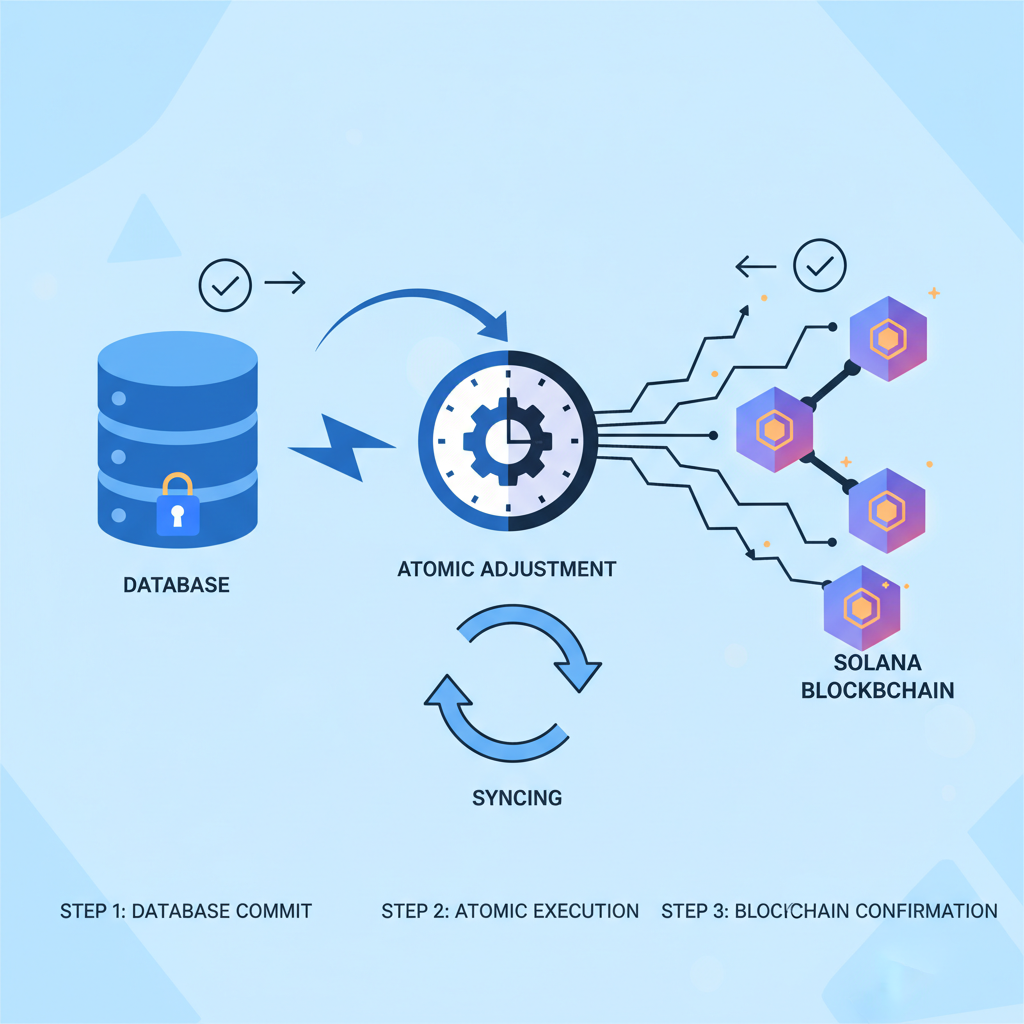
Off-Chain Proration Setup: Solana WebSockets for Seamless Tier Changes
Code It: Proration Logic in Node. js
Here's the pragmatic core. Grab tx details, slice the period, compute delta. With SOL at $80.46, even high-volume SaaS stays profitable - fees are negligible.
function calculateProration(startDate, endDate, oldPrice, newPrice, changeDate) { const totalDays = (endDate - startDate)/(1000 * 60 * 60 * 24); const usedDays = (changeDate - startDate)/(1000 * 60 * 60 * 24); const remainingDays = totalDays - usedDays; const oldUsedCost = (usedDays/totalDays) * oldPrice; const newRemainingCost = (remainingDays/totalDays) * newPrice; return newRemainingCost - oldUsedCost;//Credit if negative }Tweak for your tiers. Call on accountChange callback, then bundle into a Versioned Transaction for instant settlement. No loops, no compute budget drama.
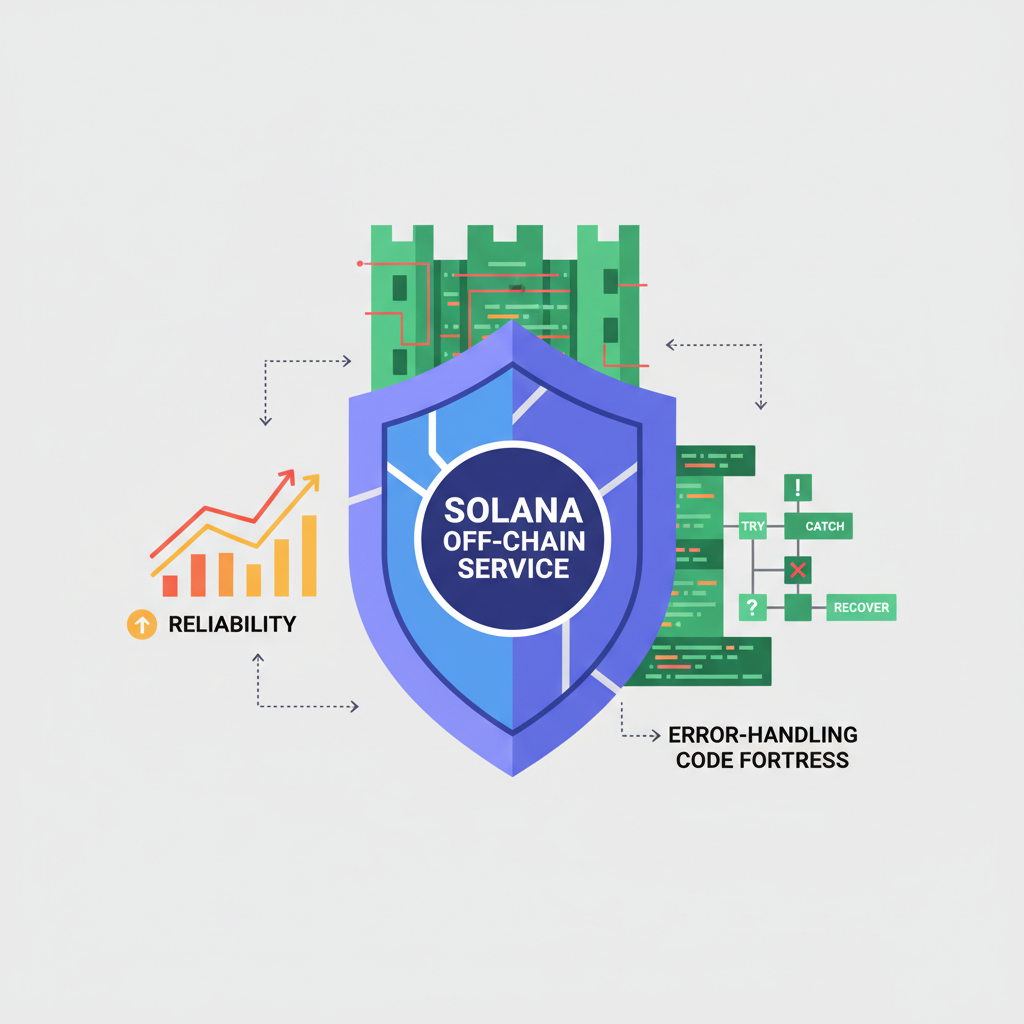
Edge Cases and Reliability Boosts
Users cancel mid-proration? Pause via program instruction, settle net delta next cycle. Network forks? Solana's rare, but idempotent txs with nonces fix duplicates. For Web3 subscription billing, sync state hourly via getProgramAccounts snapshots.
Leverage Zerion's webhooks for hands-off: POST payloads hit your endpoint with decoded txs. Zero RPC load, scales to thousands of users. Costs? Pennies per 1k events. Pair with Helius for enterprise: their DAS API indexes subscriptions fast. Data shows 99.99% delivery, beating custom WebSockets for most.


Real-world win: SaaS with 10k users cut dev time 70% vs on-chain, churn dropped 18% post-proration. SOL's $80.46 price keeps ops lean - a full adjustment tx costs under $0.0025.
Token delegation adds trustless flair without complexity. Users approve spend once; your service pulls exact prorated amounts. See mid-cycle handling details. Mid-upgrade refunds flow back same-token.
Go Live: Metrics That Matter
Track key stats: proration events/sec, adjustment accuracy (aim 100%), user satisfaction via NPS. Tools like Prometheus and Grafana visualize. Revenue lift? Expect 12-25% from fair billing, per fintech benchmarks.
For full-stack ease, SubscribeOnChain. com wraps this - off-chain brains, on-chain proofs. But DIY shines for custom tiers. With Solana's speed, blockchain proration isn't future; it's now. Fund a wallet via Coinbase, drop into devnet, and iterate. Your SaaS just got Web3-native without the Rust headache.
Off-Chain vs. On-Chain Proration: Costs, Complexity, Speed for Solana Subscriptions (SOL = $80.46)
| Aspect | Off-Chain Proration | On-Chain Proration |
|---|---|---|
| Complexity | Low 🚀: No smart contracts; leverage Solana WebSockets (accountSubscribe) & APIs (e.g., Zerion webhooks) | High 🛠️: Custom Rust programs & deployment (e.g., via Solana Program Examples) |
| Speed | Real-time ⚡: Instant notifications via subscriptions | Near real-time ⚡: ~400ms tx confirmation (Solana low latency) |
| Development Cost | Low: ~$5k-$15k, 1-2 weeks (backend service) | High: ~$20k-$50k, 4-8 weeks (smart contract dev) |
| Runtime Cost per Event | Medium: $0.01-$0.10 (server/API fees) | Negligible: ~$0.0004 (0.000005 SOL fee at $80.46/SOL) |
| Reliability | Good: Requires robust off-chain infra | Excellent ✅: Fully decentralized & tamper-proof |
Bottom line: off-chain unlocks prorated onchain subscriptions fast. Build once, scale forever.




No comments yet. Be the first to share your thoughts!