Choose your asset class and chain
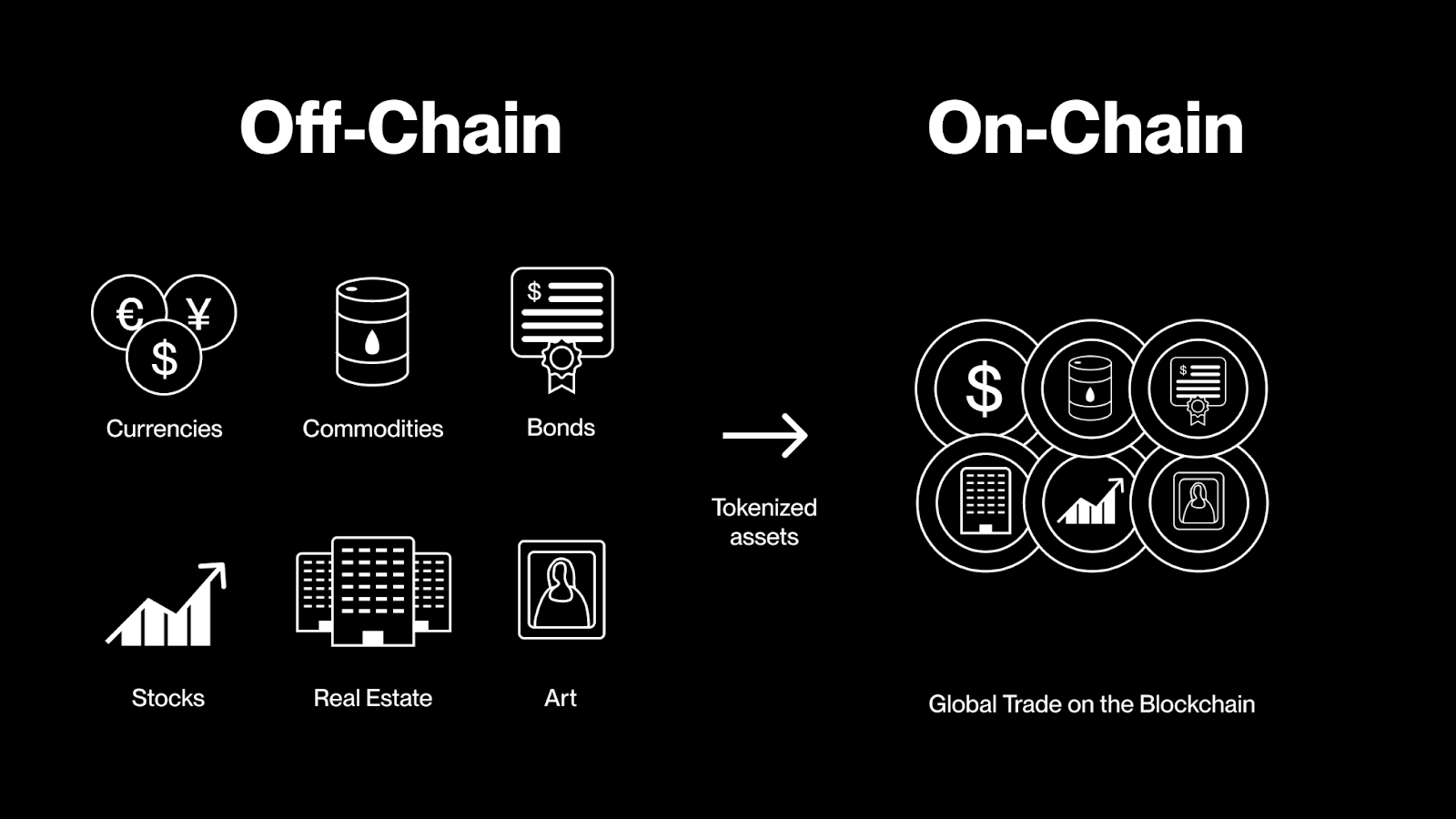
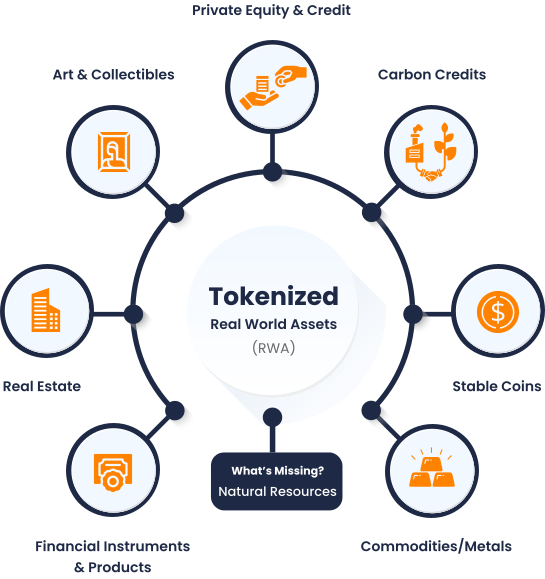
Tokenized real-world assets (RWAs) span a wide range of categories, from money market funds to private credit and real estate. The right choice depends on your target yield, risk tolerance, and preferred blockchain network. Liquidity and regulatory compliance vary significantly by asset type, so matching the token to the correct chain is essential for secure and efficient trading.
Compare RWA Categories
The table below outlines the primary characteristics of the most common RWA categories. Use this to narrow down which asset class aligns with your investment goals.
| Asset Class | Typical Yield | Liquidity | Primary Chains |
|---|---|---|---|
| US Treasuries | ~4-5% | High | Ethereum, Avalanche, Ondo |
| Private Credit | ~8-12% | Low-Medium | Ethereum, Polygon, Centrifuge |
| Real Estate | ~6-9% | Low | Ethereum, Polymesh, Securosys |
| Commodities (Gold) | 0% (Appreciation) | Medium | Ethereum, Algorand, Paxos |
Evaluate Liquidity and Compliance
Liquidity determines how quickly you can exit a position. Tokenized US Treasuries and gold often trade on high-volume decentralized exchanges, offering near-instant settlement. In contrast, tokenized real estate and private credit are illiquid assets with longer holding periods, often requiring secondary market approvals or lock-up periods.
Regulatory compliance is equally critical. Assets like US Treasuries are heavily regulated and often restricted to accredited investors on specific chains like Polymesh or Securitize’s platform. Private credit and real estate may have varying KYC/AML requirements depending on the issuer. Always verify the legal structure of the token and the jurisdiction of the underlying asset before investing.
Select the Right Blockchain
Not all blockchains are optimized for RWAs. Ethereum offers the deepest liquidity and most robust developer tools, making it the default for many tokenized funds. However, it can be expensive for small transactions. Layer-2 solutions like Arbitrum and Base are gaining traction for RWA tokenization due to lower fees and Ethereum security.
Specialized chains like Polymesh and XRP Ledger are built specifically for regulated securities. Polymesh includes built-in identity verification and compliance features, which can simplify regulatory adherence. XRP Ledger has seen significant growth in RWA tokenization, with over $3 billion in real-world assets recently added to the network. Choose a chain based on the asset’s regulatory needs and your preference for liquidity versus compliance features.
Set up a compliant crypto wallet
To invest in tokenized real-world assets, you need a self-custody wallet that supports the specific token standards used by RWA platforms. Most tokenized securities, such as tokenized US Treasuries or private credit funds, rely on ERC-20 for fungible assets or ERC-3643 for compliant, identity-verified tokens. A standard wallet that only handles basic ETH or simple ERC-20s may not allow you to interact with RWA protocols that require Know Your Customer (KYC) checks.
1. Choose a wallet with multi-chain support
Select a non-custodial wallet like MetaMask or Rabby that allows you to manage multiple blockchain networks. RWA tokens are not limited to Ethereum; they frequently reside on Polygon, Avalanche, or specialized networks like the XRP Ledger, which has seen significant growth in tokenized value. Ensure your wallet can add these networks manually if they are not pre-installed. This flexibility is essential because RWA issuers often choose chains based on cost and regulatory compliance rather than popularity alone.
2. Enable ERC-3643 and security token support
Not all wallets display security tokens by default. ERC-3643 is a standard designed specifically for regulated assets, embedding identity data directly into the token. You must verify that your wallet interface can recognize and display these tokens. If your wallet does not support ERC-3643 out of the box, you may need to use a dedicated RWA portal or a wallet with advanced token filtering. Without this support, you might see your balance as zero even if you hold valid tokens, because the wallet cannot interpret the custom metadata.
3. Connect to an RWA provider for identity verification
Before you can receive or trade tokenized assets, you must complete identity verification. Unlike buying Bitcoin on an exchange, self-custody RWA investing requires you to prove your identity on-chain. When you connect your wallet to an RWA platform, it will prompt you to link your verified identity. This process often involves uploading government ID and a selfie. The platform issues a "Soulbound Token" or a similar non-transferable credential to your wallet, proving you are KYC-compliant. Without this credential, smart contracts will reject your transactions, even if you have funds in the wallet.
4. Fund your wallet with the correct native currency
Each blockchain network requires its own native token to pay for transaction fees (gas). If you are buying tokenized US Treasuries on Ethereum, you need ETH. If you are investing in tokenized real estate on Polygon, you need MATIC. Do not send ETH to a Polygon address, or your funds will be lost. Double-check the network before transferring funds from your exchange or bank. RWA platforms often provide direct on-ramps, but understanding where your funds need to land is critical to avoiding irreversible errors.
5. Test with a small transaction
Before committing significant capital, send a small amount of the target token to your wallet. This confirms that your wallet can correctly display the token balance and that your identity verification is active. It also helps you understand the gas fees and transaction times associated with the specific RWA network. Once you see the token appear in your wallet interface, you are ready to engage with larger positions.
Execute the on-chain purchase
Buying tokenized real-world assets requires more than just connecting a wallet; it demands strict verification of the underlying smart contract. Unlike standard crypto swaps, RWA tokens often live on specific chains or within private, permissioned pools. A single wrong address can result in permanent loss of funds.
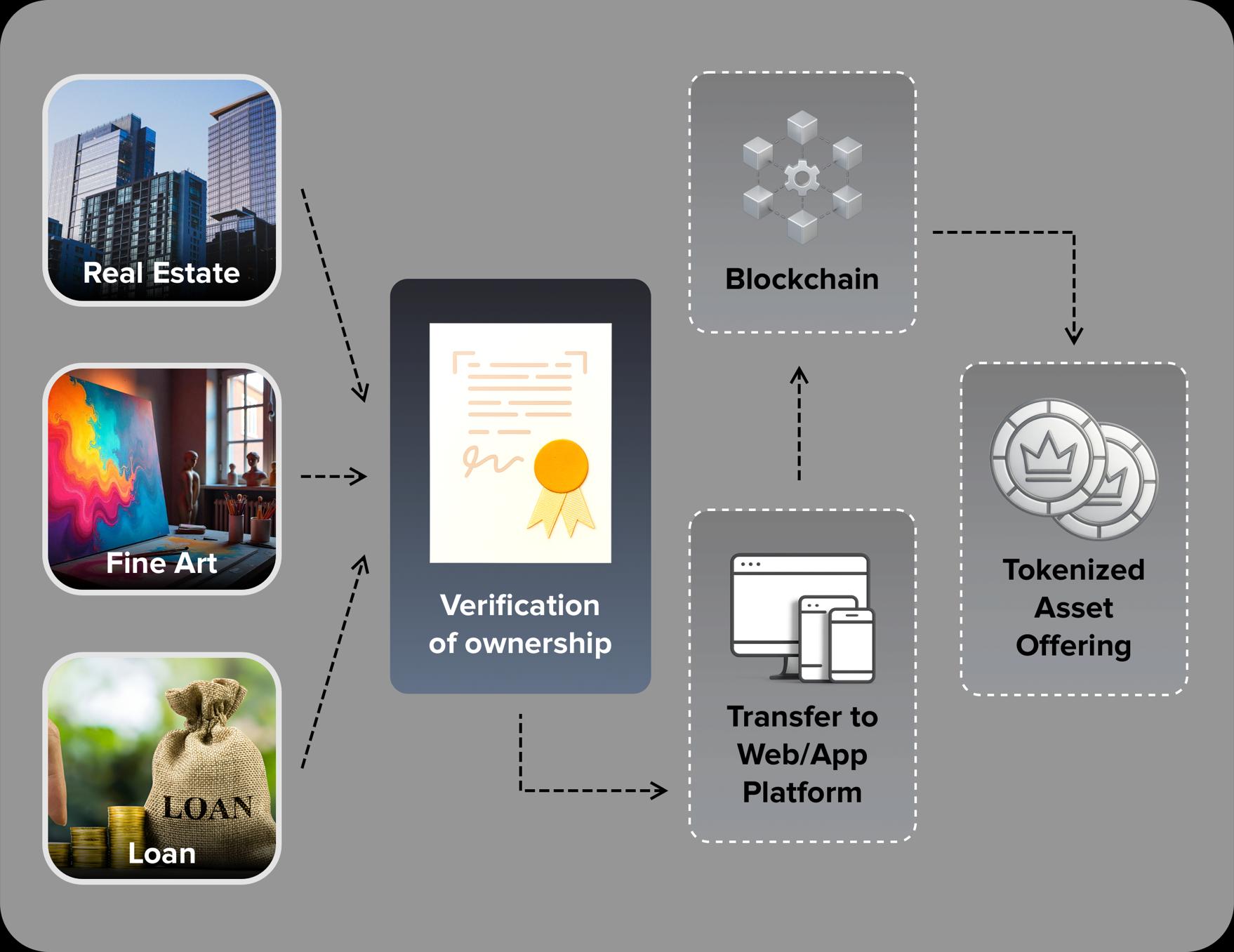
Most RWA platforms do not accept direct fiat deposits for token purchases. You must first bridge or swap cryptocurrency (usually ETH, USDC, or USDT) into the wallet address that will hold the tokens. Ensure your wallet has enough native gas tokens for the specific blockchain the RWA is issued on, whether that is Ethereum, Polygon, or a dedicated ledger like the XRP Ledger.
Before initiating any transaction, copy the official token contract address directly from the issuer’s verified website or their official documentation. Never rely on addresses found in random Telegram groups, Twitter DMs, or unverified DEX listings. Scammers frequently create "honeypot" tokens with similar names but different contract addresses to drain funds.
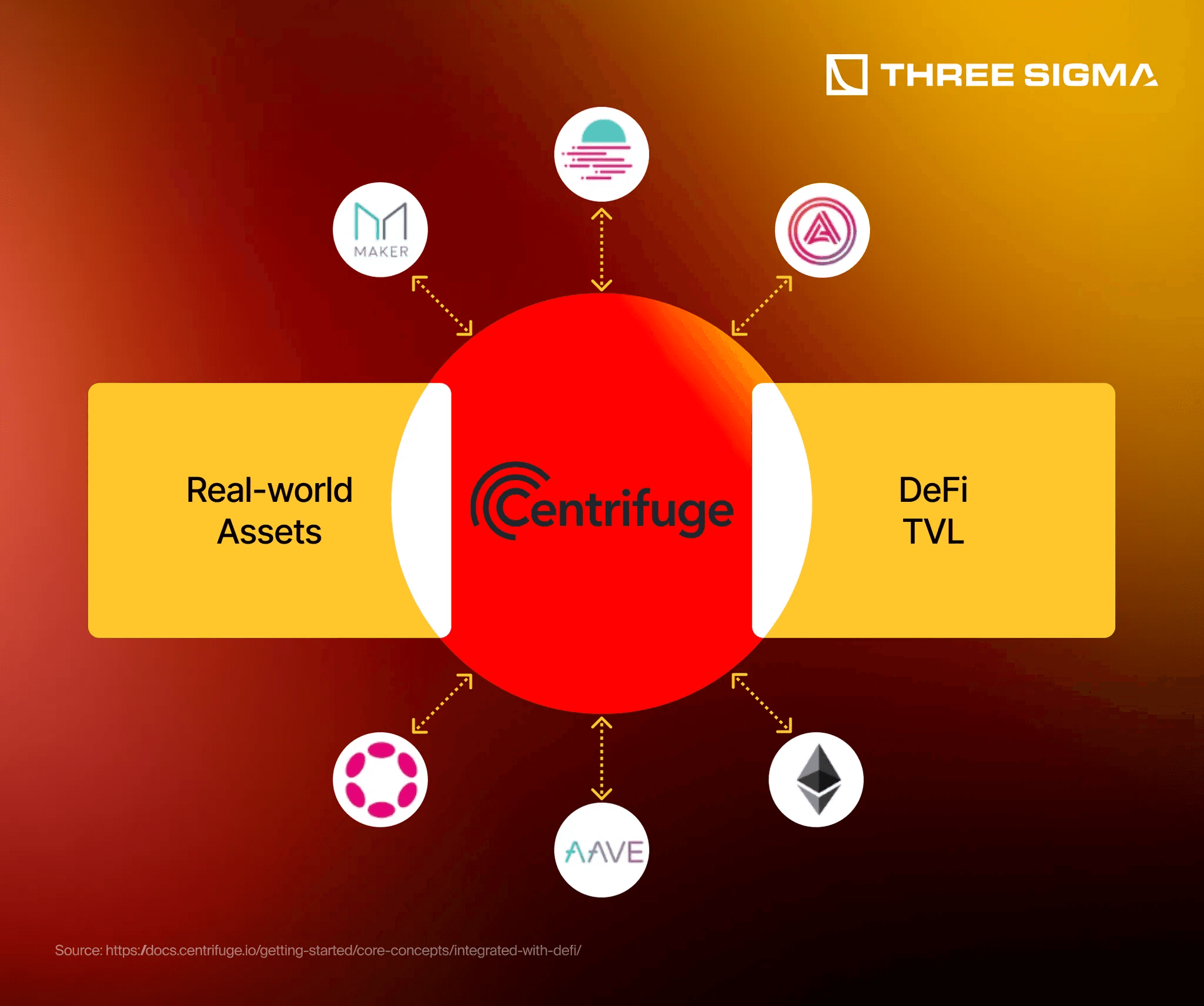
Depending on the asset, you will trade on a decentralized exchange (DEX) like Uniswap or a specialized RWA marketplace like Centrifuge or Maple Finance. If the asset is permissioned, you may need to complete KYC/AML checks on the platform before the "Buy" or "Swap" function becomes active. Connect your wallet only to the official domain of the platform.
Enter the exact amount of tokens you wish to purchase. Check the "slippage" tolerance and the network fee (gas). For high-value RWA transactions, it is prudent to execute the swap in small increments to test the transaction flow before committing larger sums. Once confirmed, the tokens will appear in your wallet, and you should verify the balance matches the expected amount.
The RWA market is expanding rapidly, with total value reaching approximately $31.4 billion by May 2026. However, this growth attracts bad actors. Treat every RWA purchase with the same caution you would apply to a wire transfer, not a casual crypto trade.
Verify custody and compliance status
Before funding a tokenized real-world asset position, you must confirm two things: the underlying asset actually exists and is held by a regulated entity, and the issuer is operating within legal boundaries. The RWA market has grown from $6.6 billion to over $26 billion in a single year, but this growth has not eliminated the risk of fractional ownership claims that lack proper backing [1].
Start by identifying the custodian. The entity holding the physical asset—whether it is a bank, a trust company, or a specialized custodian—must be licensed in the jurisdiction where the asset is located. If the issuer cannot provide a clear, auditable link between the token and the physical item, walk away. You are not buying a token; you are buying a claim on a physical asset, and that claim must be legally enforceable.
Next, check the regulatory framework. In the United States, ensure the token complies with SEC regulations regarding securities. In Europe, verify adherence to the Markets in Crypto-Assets (MiCA) regulation. Reputable issuers will publish their legal opinions and compliance reports. Look for third-party audits that confirm the reserve assets are fully collateralized. Without these checks, you are investing in a promise, not an asset.
Avoid common tokenized asset mistakes
Investing in tokenized assets introduces technical friction that traditional markets do not have. Before committing capital, check the specific mechanics of the platform you are using.
Don't ignore gas fees
Transaction costs on Layer 2 networks or sidechains can eat into small positions. If you are trading frequently, high gas fees make the strategy unprofitable. Check the network's current congestion before executing a trade.
Don't hold illiquid tokens
Just because an asset is tokenized doesn't mean it is liquid. Many RWA tokens have limited trading pairs or long settlement windows. Ensure there is an active market before you buy; otherwise, you may not be able to exit your position when needed.
Understand the redemption mechanism
Not all tokens are redeemable for the underlying asset. Some are purely speculative price mirrors. Read the smart contract terms to see if you can exchange the token for the physical asset or cash. If redemption is restricted, you are exposed to secondary market risk only.
RWA investing checklist
Before moving funds into tokenized assets, run through this due diligence sequence. This checklist helps you verify that the digital token actually represents the underlying asset and that the issuer is compliant with current regulations.
-
Verify legal structure: Ensure the token is backed by a legally enforceable trust or SPV that holds the actual asset.
-
Check issuer credentials: Confirm the platform is registered with relevant financial authorities (e.g., SEC, FCA) or operates under a recognized sandbox.
-
Audit smart contracts: Look for recent third-party security audits from reputable firms like CertiK or OpenZeppelin.
-
Review liquidity terms: Understand the lock-up periods, redemption windows, and secondary market restrictions.
-
Confirm oracle reliability: For assets like gold or real estate, verify how the off-chain value is updated on-chain.
-
Assess regulatory compliance: Ensure the token sale complies with KYC/AML requirements in your jurisdiction.
After purchase, monitor the asset’s performance and the issuer’s reporting. Regularly check for any regulatory changes that might affect the token’s status or the underlying asset’s value.
No comments yet. Be the first to share your thoughts!