
Pick the right subscription protocol
Choosing a subscription protocol means selecting the infrastructure that matches your chain’s capabilities and your risk tolerance. The landscape splits into three main approaches: native chain protocols, third-party smart contract platforms, and specialized payment aggregators. Each handles recurring billing differently, affecting your user experience and technical overhead.
The following table compares the primary infrastructure options available in 2026. Focus on the escrow model versus direct on-chain execution, as this dictates how funds are secured and how users interact with your service.
Solana’s Recurring Delegations offer the simplest path for Solana-native projects. They allow users to authorize repeated payments up to a defined amount on a fixed cadence without wrapping tokens or using relayer networks [src-serp-3]. This native approach minimizes gas costs and eliminates the need for third-party smart contracts, reducing attack surfaces.
For multi-chain needs, Sphere Pay provides a true on-chain solution that avoids escrow, token wrapping, or complex relayer networks [src-serp-1]. Merchants can offer subscribe-and-forget experiences across various chains by leveraging Sphere’s smart contract infrastructure. This reduces integration time compared to building custom recurring payment logic.
Eco serves as a broader payment infrastructure layer that supports recurring crypto billing across multiple chains. It often utilizes an escrow mechanism to guarantee payments, which adds a layer of security for merchants but requires users to interact with additional smart contracts [src-serp-2]. This model is useful when you need robust dispute resolution or fiat-on-ramp integration alongside subscriptions.
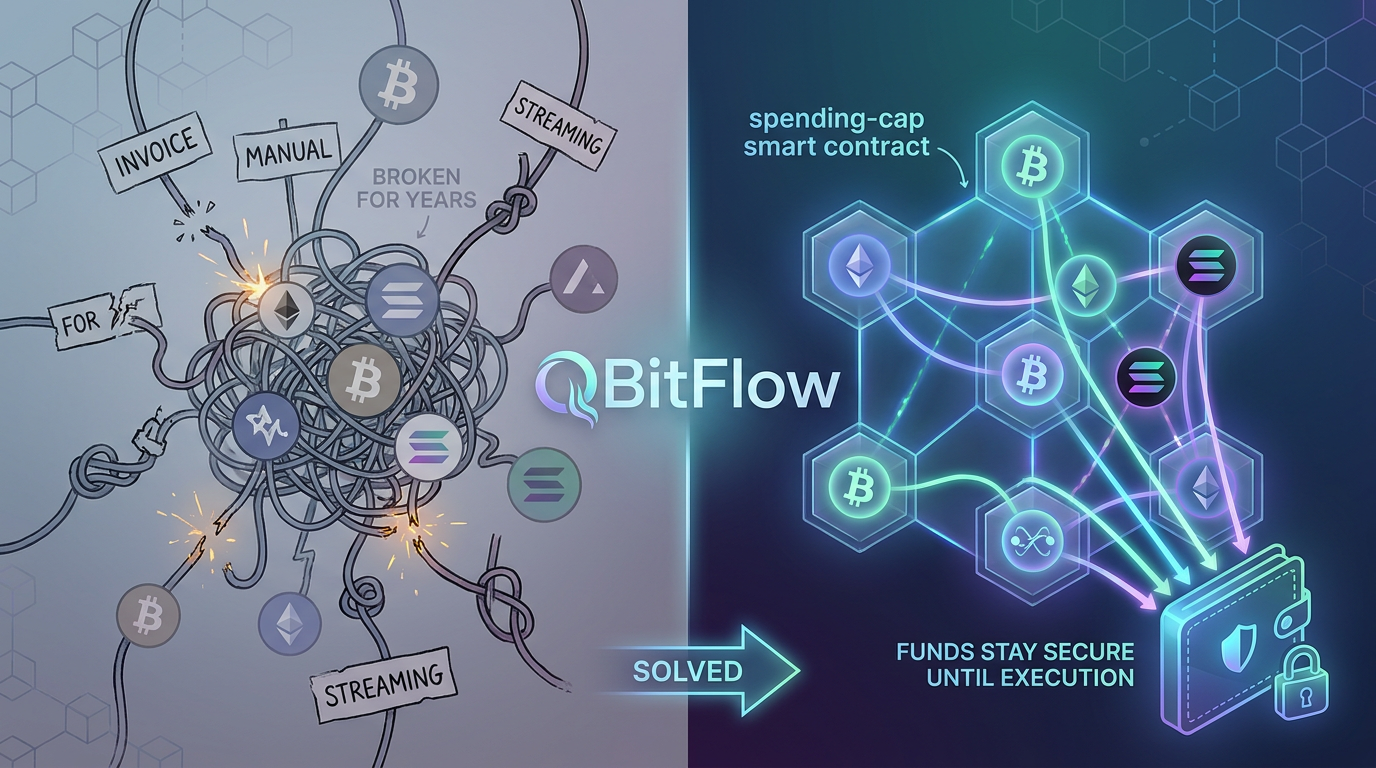
Your choice depends on whether you prioritize chain-native efficiency (Solana), cross-chain flexibility (Sphere), or comprehensive payment infrastructure (Eco). Evaluate your users’ existing wallets and the chains they already use before committing to a protocol.
Configure recurring payment rules
Setting the cadence and asset parameters for an on-chain subscription determines how reliably the contract executes without manual intervention. Unlike traditional subscriptions that rely on recurring authorization tokens managed by a bank, on-chain recurring payments depend on smart contract logic to trigger transfers at defined intervals. The configuration phase requires precise input for the billing cycle, the stablecoin used for settlement, and the withdrawal limits to protect both the merchant and the subscriber.
Select the billing cadence
The first step is defining the frequency of the recurring payment. Most on-chain subscription protocols support standard intervals such as weekly, monthly, or quarterly. This setting dictates the timestamp logic within the smart contract, ensuring that the payment trigger activates only after the previous cycle has concluded.
When configuring the cadence, consider the volatility of the underlying asset. If you are accepting volatile cryptocurrencies, a shorter cadence (e.g., weekly) may be preferable to mitigate exposure to price swings. For stablecoin-based subscriptions, monthly or quarterly cycles are standard and align with typical consumer expectations for digital services. Ensure the interval is long enough to cover the gas costs of the transaction relative to the subscription value; excessively frequent micro-payments can erode margins through network fees.
Choose the stablecoin for settlement
Stablecoins are the preferred medium for on-chain subscriptions due to their price stability, which simplifies accounting for both the merchant and the user. Common choices include USDC, USDT, and DAI, each operating on different blockchain networks with varying transaction costs and speeds.
Select the stablecoin that aligns with your target audience’s existing wallet holdings. USDC is widely supported across major layer-2 networks like Arbitrum and Optimism, offering low fees and fast finality. If your audience primarily uses Ethereum mainnet, be aware that transaction costs can be higher, potentially making lower-tier subscriptions economically unviable. Verify that the chosen stablecoin is compatible with the subscription platform you are using, as some protocols restrict settlement to specific token standards or networks.
Set withdrawal and refund limits
Defining clear withdrawal limits and refund policies is critical for managing risk and maintaining trust. Withdrawal limits cap the maximum amount that can be transferred from a subscriber’s wallet in a single cycle or over a rolling period. This feature acts as a safeguard against accidental over-subscription or malicious contract exploitation.
Implement a tiered limit structure if your service offers multiple subscription levels. For example, a basic tier might have a lower monthly cap, while a premium tier allows for higher volume. Additionally, configure the refund logic within the smart contract or platform settings. If a subscriber cancels mid-cycle, does the contract prorate the remaining balance, or is the full period non-refundable? Clear, automated refund rules reduce customer support overhead and prevent disputes. Document these limits in your subscription terms to ensure transparency, as on-chain transactions are immutable and cannot be reversed once confirmed.
Link content access to wallet ownership
Enforcing access requires a direct link between the user’s wallet and the protected content. This process, known as token-gating, checks if a wallet holds the necessary credentials before granting entry. It transforms a static URL into a dynamic gate that only opens for active subscribers.
The system works by verifying on-chain presence. When a user attempts to access a dashboard, forum, or media library, the frontend queries the blockchain for specific tokens or NFTs. If the wallet lacks the required asset, access is denied. This prevents unauthorized sharing and ensures that only paying members see the content.
Implement the verification logic
The first step is identifying which on-chain assets represent your subscription. This could be a specific ERC-20 token, an NFT, or a Soulbound Token (SBT). Once defined, you integrate a verification library into your application. This library runs a check against the user’s connected wallet address. If the check returns true, the application renders the protected content. If false, it displays a paywall or login prompt.
Automate real-time status checks
Static checks are insufficient for subscriptions because membership status changes. You must implement real-time verification to handle cancellations or failed payments. Tools like DropLinked leverage on-chain attribution to verify these statuses continuously. This ensures that if a subscription lapses, access is revoked immediately rather than waiting for a manual review.
Secure the payout chain
Token-gating is only half the equation; you must also secure the revenue stream. Use smart contracts to automate payouts to creators and affiliates. This eliminates the need for manual invoicing and reduces the risk of chargebacks. By linking access directly to on-chain payments, you create a closed loop where payment and permission are inseparable.
Handle failed payments and refunds
On-chain finance carries higher stakes than traditional fiat. When a subscription payment fails, you cannot simply reverse a transaction or rely on a bank’s dispute resolution. You must architect a system that detects failure, communicates with the subscriber, and manages refunds without manual intervention.
Detect and flag failed transactions
Most subscription failures stem from insufficient funds or expired payment methods. Your smart contract or payment processor must immediately flag these events. Do not wait for the next billing cycle to discover the error.
Integrate real-time monitoring to identify failed attempts. Platforms like Eco provide infrastructure for recurring crypto payments, allowing you to track the status of each recurring transaction across multiple chains. Early detection prevents revenue leakage and gives you time to act before the subscriber churns.
Automate subscriber notifications
When a payment fails, the subscriber needs to know immediately. Silence creates confusion and erodes trust. Set up automated notifications via email or in-app alerts to inform the user of the failure and the required action.
Include clear instructions on how to update their payment method or add funds to their wallet. This step is critical for recovery. A simple nudge can often resolve the issue before the subscription expires. Avoid generic error messages; provide specific guidance on what went wrong and how to fix it.
Manage refunds and disputes
Refunds in a decentralized system are complex. Once a transaction is confirmed on-chain, it is irreversible. You must have a clear policy for handling overpayments or service disputes.
Use a multi-signature wallet or a dedicated refund contract to manage outbound refunds. This ensures that refunds are processed securely and transparently. Document your dispute resolution process and make it easily accessible to subscribers. This transparency builds trust and reduces the likelihood of escalated conflicts.
Monitor and optimize
Regularly review your failure rates and refund requests. Use this data to identify patterns and improve your payment infrastructure. For example, if you notice a high failure rate with a specific wallet provider, consider adding alternative payment options.
Continuous monitoring allows you to refine your subscription model and reduce churn. Treat payment failures as feedback, not just a lost opportunity. By addressing these issues proactively, you create a more resilient and user-friendly subscription experience.
Verify compliance and tax reporting
Before you activate your on-chain subscription contracts, you must establish a clear compliance framework. Recurring crypto payments trigger the same regulatory obligations as traditional fintech transactions. You are responsible for Know Your Customer (KYC) and Anti-Money Laundering (AML) checks for every subscriber, regardless of where they are located or which blockchain network processes their payments. Failure to implement these checks can result in severe penalties or the freezing of your smart contract funds.
Tax reporting for recurring crypto payments requires meticulous record-keeping. Each recurring transaction is a taxable event, and you must track the fair market value of the asset at the moment of receipt. Use automated tracking tools to log every subscription payment, ensuring you have the data required for quarterly filings. Consult a tax professional familiar with crypto assets before launching.
Finally, integrate compliance checks directly into your onboarding flow. Require identity verification before the first subscription charge goes through. This proactive step reduces the risk of fraudulent activity and ensures that your platform remains on the right side of financial regulations.
Launch checklist for on-chain subscriptions
Before going live, verify that your recurring payment infrastructure handles edge cases without manual intervention. Use this sequence to ensure technical, legal, and operational readiness.
-
Configure recurring payment parameters: Define cadence, limits, and allowed chains. Ensure your provider supports "subscribe and forget" mechanics to minimize user friction [src-serp-1].
-
Implement compliance checks: Verify KYC/AML workflows for high-volume recurring transactions. Consult official regulatory guidance for your jurisdiction to avoid penalties.
-
Test failure recovery: Simulate failed transactions and insufficient funds. Confirm that your system automatically retries or notifies the subscriber without charging excessive fees.
-
Audit smart contract security: If using custom contracts, run a final security audit. Ensure no unexpected permissions exist for account upgrades or fund withdrawals.
-
Set up monitoring: Deploy alerts for failed subscriptions and unusual volume spikes. Use real-time dashboards to track churn and revenue anomalies.
Once these items are confirmed, your on-chain subscription model is ready to accept recurring payments securely.
Common questions about on-chain billing
On-chain subscriptions automate recurring payments by letting users authorize repeated transfers on a fixed cadence. Unlike traditional billing, these systems often operate without escrow or token wrapping, relying instead on smart contract permissions to execute charges automatically.
How do on-chain subscriptions work?
Users grant a smart contract permission to withdraw a specific amount of tokens at set intervals. Once authorized, the merchant can collect payments without requiring the user to approve each transaction individually. This "subscribe and forget" model reduces friction for both customers and merchants, streamlining the recurring billing process across multiple chains.
What are the main risks of on-chain billing?
The primary risk lies in the permission structure. If a merchant’s smart contract is compromised, attackers could drain authorized funds. Additionally, users must carefully monitor their allowances, as revoking access after a subscription starts can be complex. Always verify the contract’s audit status and limit permissions to the exact amount needed for the billing cycle.
Can I cancel an on-chain subscription?
Yes, but the process depends on the protocol. Most systems allow users to revoke token approvals directly from their wallet interface, stopping future charges. However, this does not automatically refund already-processed payments. Always check the merchant’s terms and the specific contract documentation to understand the cancellation workflow and any potential penalties.
Work through Why is the Year of On-Chain Subscriptions
No comments yet. Be the first to share your thoughts!