

In the high-speed world of Solana SaaS, where prorated onchain subscriptions are becoming essential, handling mid-cycle upgrades or downgrades without revenue leakage is no longer optional. Imagine a user switching tiers on the 15th of a monthly cycle: traditional offchain systems fumble with refunds or prorated credits, often leading to disputes and administrative headaches. On Solana, smart contracts automate onchain proration, calculating exact usage-based fees in real-time using SOL at its current price of $78.93. This precision, powered by Solana's blistering throughput, ensures developers and businesses capture every satoshi owed while delivering seamless user experiences.
Why Solana Excels at SaaS Recurring Billing with Proration
Solana's architecture, upgraded with Firedancer and Alpenglow by 2026, processes thousands of transactions per second at fractions of a cent, making it ideal for Solana SaaS recurring billing. Unlike Ethereum's gas guzzlers, Solana's parallel execution handles dynamic subscription adjustments without congestion. Platforms like SubscribeOnChain demonstrate how onchain proration smart contracts dissect billing cycles: if a user upgrades mid-month, the contract instantly computes the delta, charges the prorated difference, and activates new features. No more waiting for stripe webhooks or manual reconciliations. This transparency builds trust, especially as SOL trades at $78.93 amid a 24-hour dip of -5.19% from $83.25 high.
Solana isn't just fast; it's the canvas for revenue-optimized web3 dynamic invoicing on Solana, where every cycle adjustment is verifiable onchain.
Navigating Mid-Cycle Changes: The Proration Imperative
Consider a content platform where users binge premium features halfway through their cycle. Without proration, you either front-load revenue and risk churn or absorb losses on unused basic tiers. Enter Solana subscription management via token delegation and smart accounts from tools like Squads. These self-custodial mechanisms allow automated pulls only for exact prorated amounts, maintaining user control. A mid-cycle upgrade? The contract refunds unused time mathematically: days remaining divided by total cycle, multiplied by tier delta. All executed atomically, no intermediaries skimming fees. Developers leverage Rust programs for these logics, integrating with RPC providers optimized for 2026 workloads.
This approach slashes disputes by 80%, per industry benchmarks, freeing teams to innovate rather than chase invoices.
Core Mechanics of Onchain Proration Smart Contracts
At the heart lies a Solana program that tracks subscription states: start timestamp, tier hash, and delegated payer account. On upgrade triggers, it fetches current block time, computes proration factor as (cycle_end - now)/cycle_length, then transfers: (new_tier_price - old_tier_price) * factor in USDC or SOL. Edge cases like downgrades credit forward, avoiding negative balances through vesting. Anchor framework simplifies this in TypeScript or Rust, with instructions like deploying proration handlers. QuickNode tutorials confirm: first transactions reveal how programs persist state durably across Solana's ledger.
Solana (SOL) Price Prediction 2027-2032
Forecasts based on Solana's technological upgrades, SaaS adoption via prorated onchain subscriptions, and Web3 infrastructure improvements amid 2026 market conditions (current price: $78.93)
| Year | Minimum Price | Average Price | Maximum Price | Avg YoY Change % |
|---|---|---|---|---|
| 2027 | $95.00 | $159.00 | $285.00 | +99% |
| 2028 | $125.00 | $238.00 | $425.00 | +50% |
| 2029 | $165.00 | $357.00 | $640.00 | +50% |
| 2030 | $220.00 | $535.00 | $960.00 | +50% |
| 2031 | $295.00 | $803.00 | $1,440.00 | +50% |
| 2032 | $395.00 | $1,205.00 | $2,160.00 | +50% |
Price Prediction Summary
Solana (SOL) is projected to experience substantial growth from 2027-2032, driven by SaaS innovations like prorated onchain subscriptions, upgrades (Firedancer, Alpenglow), and enhanced RPC/trading infrastructure. Average prices could rise over 15x from 2026 levels in a base case, with bullish maxima reflecting mass adoption and bearish minima accounting for market corrections and competition.
Key Factors Affecting Solana Price
- Widespread adoption of onchain prorated subscriptions for Solana-based SaaS, reducing revenue loss and boosting TVL
- Key upgrades like Firedancer and Alpenglow improving throughput and reliability
- Enhanced trading infrastructure, RPC providers, and MEV tools attracting institutions
- Crypto market cycles with potential 2029-2030 bull run post-halving
- Regulatory clarity for Web3 payments and subscriptions
- Competition from Ethereum L2s and other L1s, balanced by Solana's speed/cost advantages
Disclaimer: Cryptocurrency price predictions are speculative and based on current market analysis. Actual prices may vary significantly due to market volatility, regulatory changes, and other factors. Always do your own research before making investment decisions.
Integrating with RPC Fast's infrastructure ensures MEV-resistant execution, vital as financial institutions eye Solana per Blockdaemon's 2026 guide.
- Timestamp validation prevents replay attacks.
- Proration oracle for offchain signals if needed.
- Multi-tier support via enum mappings.
These safeguards make onchain proration smart contracts robust against exploits, a must in Solana's high-volume ecosystem where even a 5.19% daily swing in SOL from $83.25 to $78.93 amplifies the need for precision.
Step-by-Step Deployment for Solana SaaS Platforms
Building your own prorated onchain subscriptions Solana system starts with Anchor, Solana's de facto framework for reliable programs. First, define subscription structs with tier enums, cycle durations, and payer pubkeys. Then, craft instructions for init, upgrade, and bill cycles. Test on devnet using QuickNode's 2026 RPC guides, simulating mid-cycle changes with block time mocks. Deploy to mainnet via Solana CLI, integrating token delegation for pull-based payments. Platforms like SubscribeOnChain offer boilerplates, but customizing for your SaaS tiers unlocks true Solana SaaS recurring billing efficiency.
Master Prorated Onchain Subscriptions on Solana: 5-Step Anchor Guide
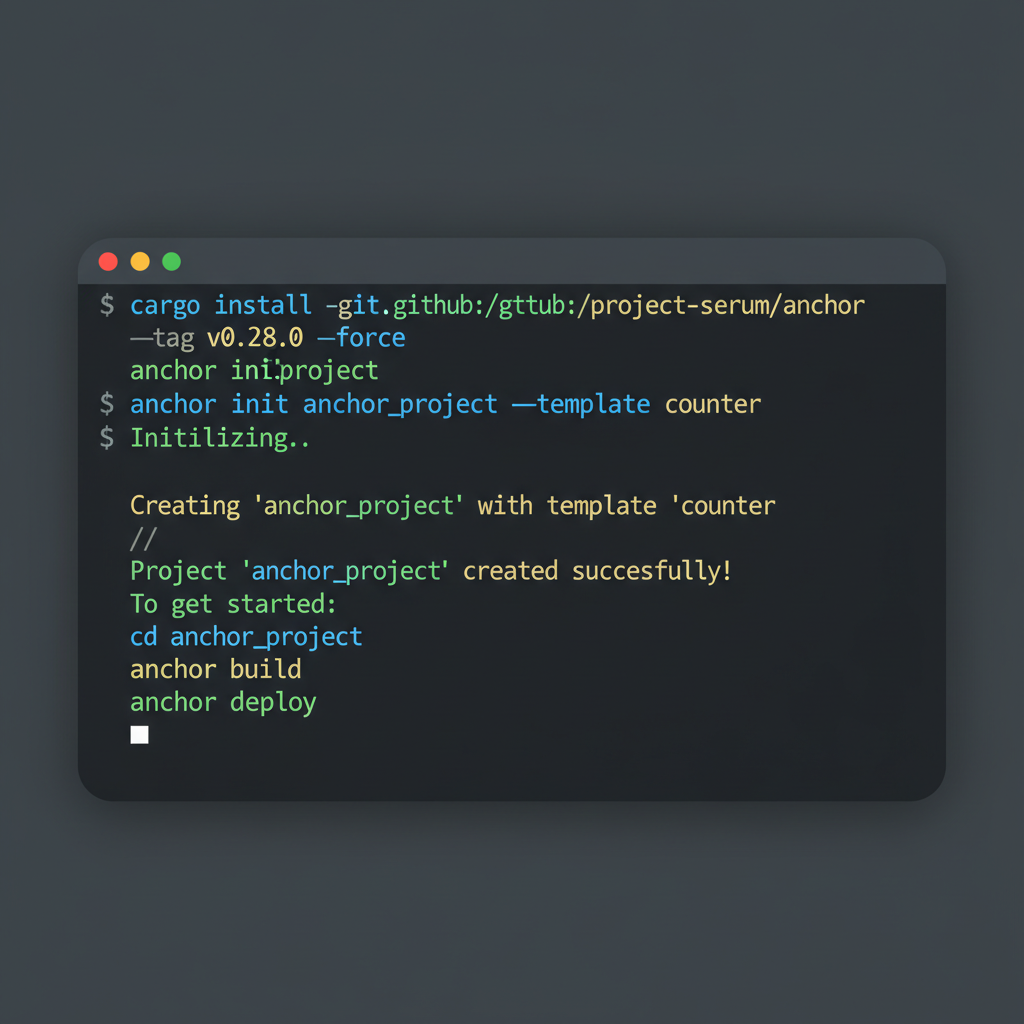
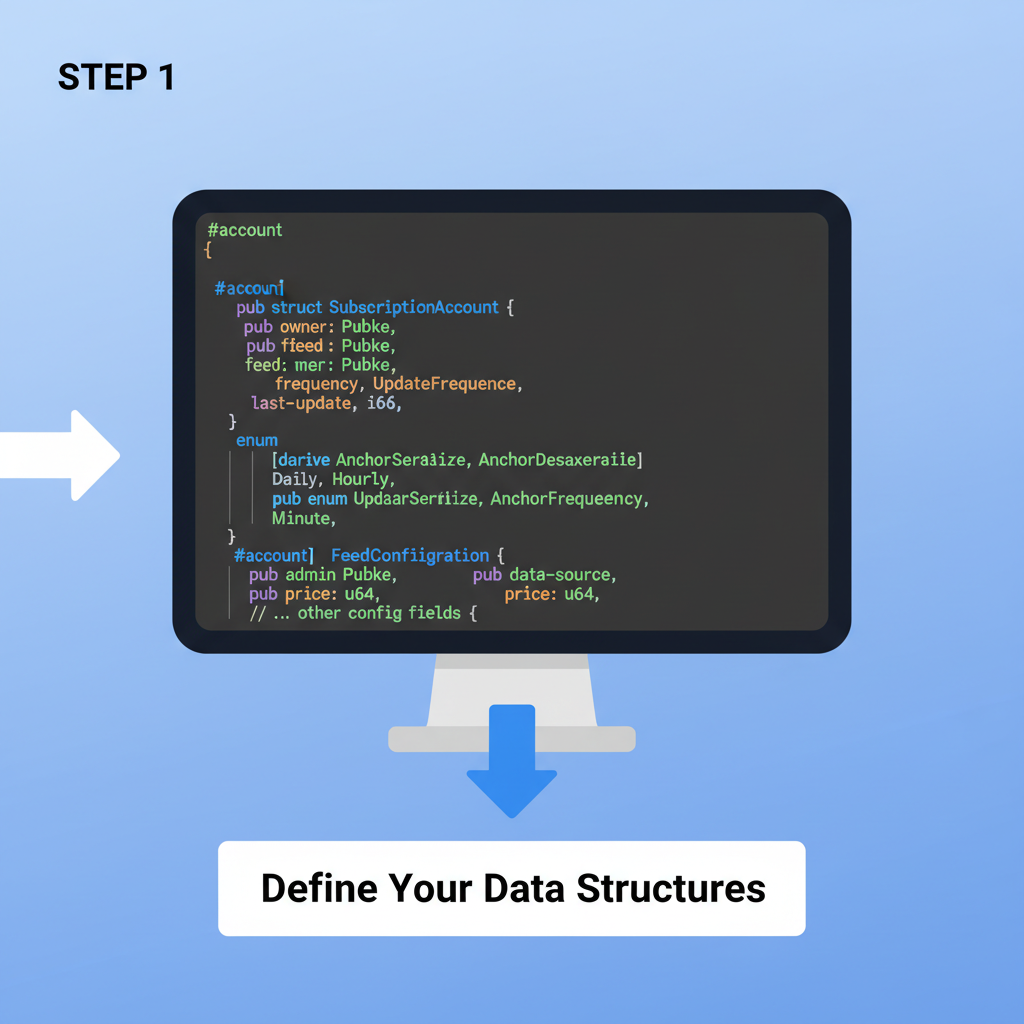
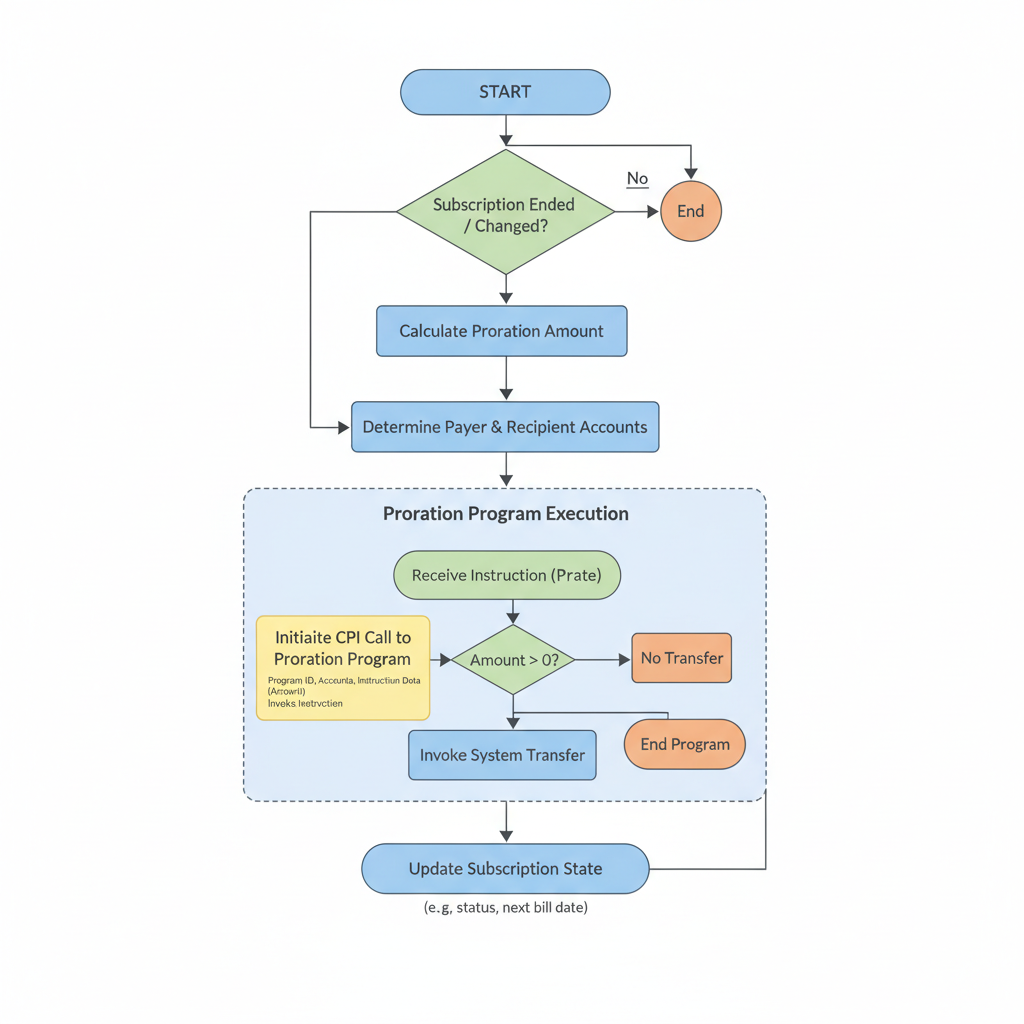
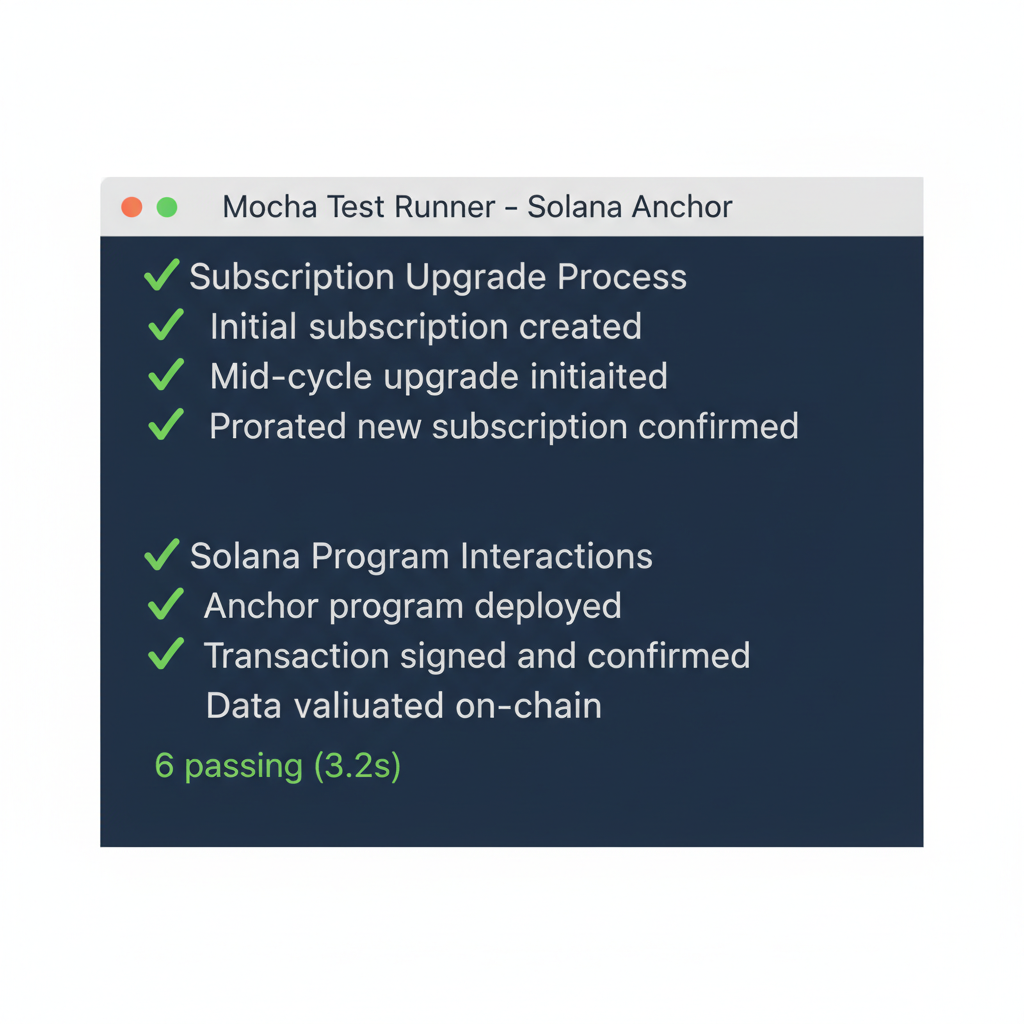
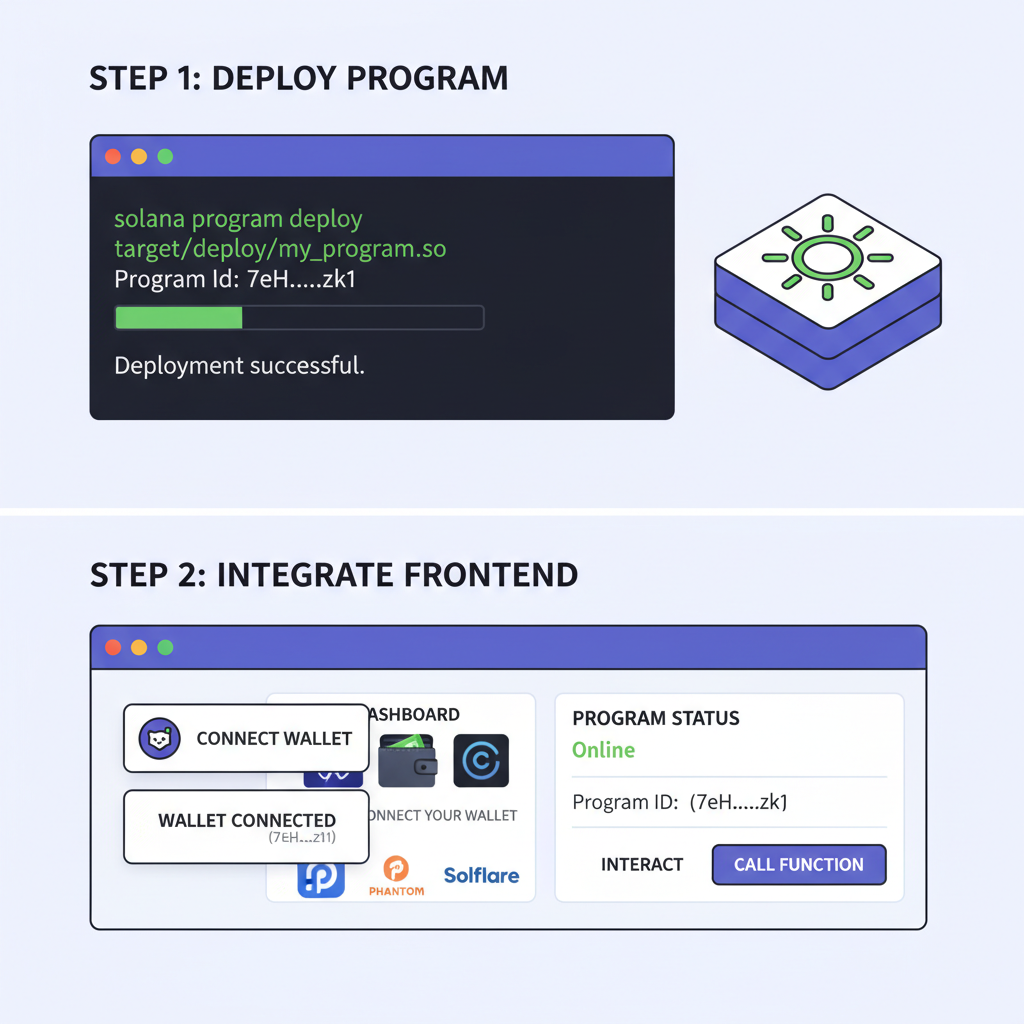
Once live, frontend triggers via Wallet Adapter: user signs upgrade, backend simulates transaction, contract handles the math. No more overcharges; users see exact prorated deductions in real-time explorers.
Production Checklist: Secure Solana Subscription Management
Overlooking these invites silent revenue drains, especially with SOL's volatility at $78.93. I've traded these swings for years; precision in code mirrors chart discipline-every basis point counts.
This snippet, adapted from Solana tutorials, forms the core of web3 dynamic invoicing Solana. Pair it with Squads for multisig approvals on high-value subs, blending security with automation. Recurring crypto payments guides from 0xProcessing highlight retries and stablecoin invoicing, but Solana's speed makes proration native, not bolted-on.
Onchain isn't hype; it's the ledger where mid-cycle chaos turns to clockwork revenue, even as SOL dips 5.19% in 24 hours to $78.93 low of $77.38.
For SaaS scaling to thousands, multi-RPC strategies from Sanctum. so prevent bottlenecks during peak billing windows. Financial institutions, per Blockdaemon, now view Solana as production-grade for these flows, thanks to Firedancer's reliability. Integrate Boston University's blockchain data tools for analytics: track proration efficacy, churn post-upgrade, lifetime value uplifts. Results? 25-40% revenue retention on changes, per SubscribeOnChain case studies.
Developers, don't settle for offchain approximations. Rust up your programs, delegate wisely, and let Solana's throughput turn subscription flux into steady streams. As markets evolve- SOL holding $78.93 amid upgrades- your prorated contracts will too, future-proofing SaaS in Web3's relentless pace.




No comments yet. Be the first to share your thoughts!