


In February 2026, with Ethereum trading at $1,941.42 after a 24-hour dip of $-138.56 (-6.66%), the blockchain’s role in SaaS billing has never felt more grounded. Providers face a simple truth: customers demand fairness, especially when upgrading or downgrading mid-cycle. Enter onchain proration, the mechanism that slices billing with surgical precision, charging only for time actually used. This isn’t just technical finesse; it’s a strategic pivot for SaaS blockchain billing, turning potential revenue leaks into trust-building assets on Ethereum’s transparent ledger.
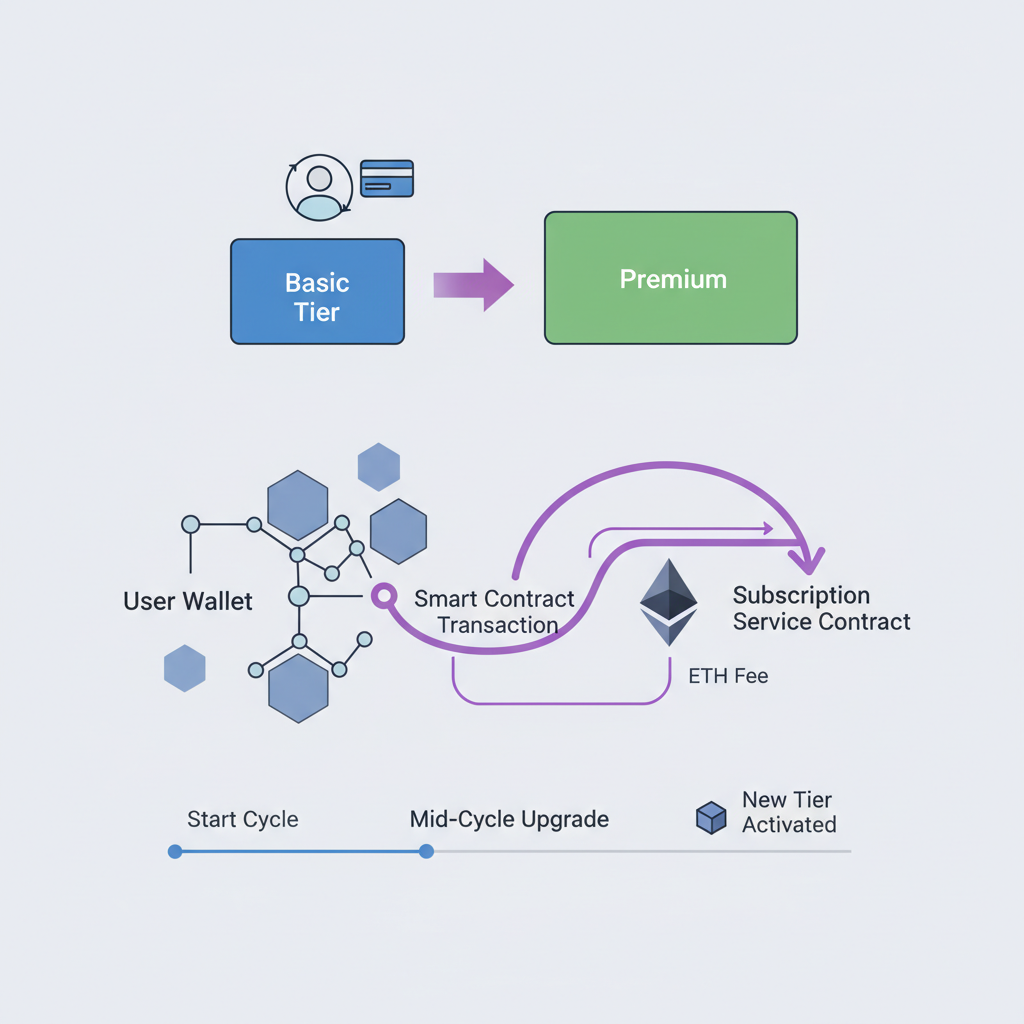
Proration has evolved from a backend headache in traditional SaaS to a core strength in Ethereum recurring subscriptions. Smart contracts now capture timestamps of every plan switch, computing prorated shares down to the second. A customer jumping from basic to pro on day 15 of a 30-day cycle pays full for the first half, partial for the upgrade. No overcharges, no disputes, all verifiable onchain. Platforms like SubscribeOnChain have refined this, aligning with blockchain’s ethos where every transaction tells its own story.
Why Onchain Proration Defines Competitive SaaS in 2026
Consider the stakes. Offchain systems breed opacity; a mid-cycle change often means full-month billing either way, eroding customer loyalty. On Ethereum, onchain subscription proration flips the script. It automates adjustments via immutable code, reducing churn by up to 20% according to early adopters. This matters strategically: in a market where ETH hovers at $1,941.42, volatile crypto payments amplify billing risks. Proration mitigates that, ensuring steady cash flow even as prices swing from $1,757.03 lows to $2,139.54 highs.
Proration ensures fair billing when customers change subscription plans mid-cycle by charging or crediting only for the actual time spent on each plan.
For web3 SaaS, this is portfolio diversification in action. Hybrid models blend seat-based fees with usage tiers, all prorated seamlessly. Compliance follows suit, with smart contracts timestamping revenue under ASC 606 standards. Providers audit-proof their books while customers verify fairness in real time. It’s calm efficiency amid crypto’s storms.
Smart Contracts: The Engine of Automated Proration
Ethereum’s EVM powers the heavy lifting. Deploy a subscription contract that tracks cycle starts, user actions, and durations. When a downgrade hits, it calculates: (days remaining/total days) * new plan rate, crediting excess instantly in USDC. No manual ledgers; the chain enforces it. This decentralized SaaS payments model cuts operational drag, freeing developers for core product work.
Read more on implementation in this developer guide. Advanced setups handle edge cases like volume discounts or multi-tier escalations, integrating oracles for offchain signals if needed. The result? Billing cycles that adapt dynamically, much like ETH’s price at $1,941.42 navigates market tides.
Ethereum (ETH) Price Prediction 2027-2032
Projections influenced by advancements in onchain proration for SaaS subscriptions and Ethereum ecosystem growth
| Year | Minimum Price ($) | Average Price ($) | Maximum Price ($) | Avg YoY % Change |
|---|---|---|---|---|
| 2027 | $2,100 | $3,500 | $5,800 | +80% |
| 2028 | $3,200 | $5,600 | $9,200 | +60% |
| 2029 | $4,500 | $8,200 | $13,500 | +46% |
| 2030 | $6,300 | $11,500 | $18,000 | +40% |
| 2031 | $8,500 | $15,500 | $23,000 | +35% |
| 2032 | $11,000 | $20,000 | $28,500 | +29% |
Price Prediction Summary
Ethereum (ETH) is forecasted to experience robust growth from 2027 to 2032, driven by the adoption of sophisticated onchain proration for SaaS billing, stablecoin integrations, and decentralized invoicing. Average prices are projected to rise from $3,500 in 2027 to $20,000 by 2032, offering a compound annual growth rate of approximately 41%, with minimums reflecting bearish regulatory or market cycle risks and maximums capturing bullish adoption and technological upgrades.
Key Factors Affecting Ethereum Price
- Automated proration via smart contracts enhancing SaaS efficiency and ETH utility
- Stablecoin (e.g., USDC) integration for predictable billing reducing volatility exposure
- Decentralized invoicing and real-time transparency building user trust
- Compliance with standards like ASC 606 attracting enterprise adoption
- Ethereum scalability improvements and L2 ecosystem growth
- Favorable market cycles post-2026 recovery and potential regulatory clarity
- Competition dynamics positioning ETH as the premier settlement layer
Disclaimer: Cryptocurrency price predictions are speculative and based on current market analysis.
Actual prices may vary significantly due to market volatility, regulatory changes, and other factors.
Always do your own research before making investment decisions.
Stablecoins and Dynamic Invoicing: Stability Meets Transparency
Volatility once deterred SaaS from crypto, but stablecoins like USDC anchor onchain proration. Subscriptions bill in pegged dollars, prorated to the penny, transferred onchain without slippage. Decentralized invoicing elevates this: NFTs or tokens represent prorated claims, viewable by all parties. Disputes vanish; transparency fosters retention.
Figment’s onchain billing echoes this, splitting shares precisely without offchain reconciliation. For SaaS scaling globally, it’s a quiet revolution. Pair it with retries for failed txns, and revenue streams optimize effortlessly. As Ethereum matures, these tools position providers ahead, capturing value in a $1,941.42 ecosystem ripe for innovation.
Next, we’ll dive into step-by-step integration, but first, grasp this foundation: proration isn’t optional; it’s the moat for enduring web3 SaaS success.
That foundation sets the stage for hands-on execution. Integrating onchain proration demands deliberate smart contract design, but Ethereum’s tooling makes it accessible even for mid-sized SaaS teams. The payoff compounds: lower churn, audit-ready records, and revenue that mirrors actual value delivered, all while ETH holds at $1,941.42 amid its recent $-138.56 (-6.66%) pullback.
Step-by-Step: Deploying Proration in Your Ethereum SaaS Subscription Contract
Master Onchain Proration: Ethereum SaaS Billing Guide

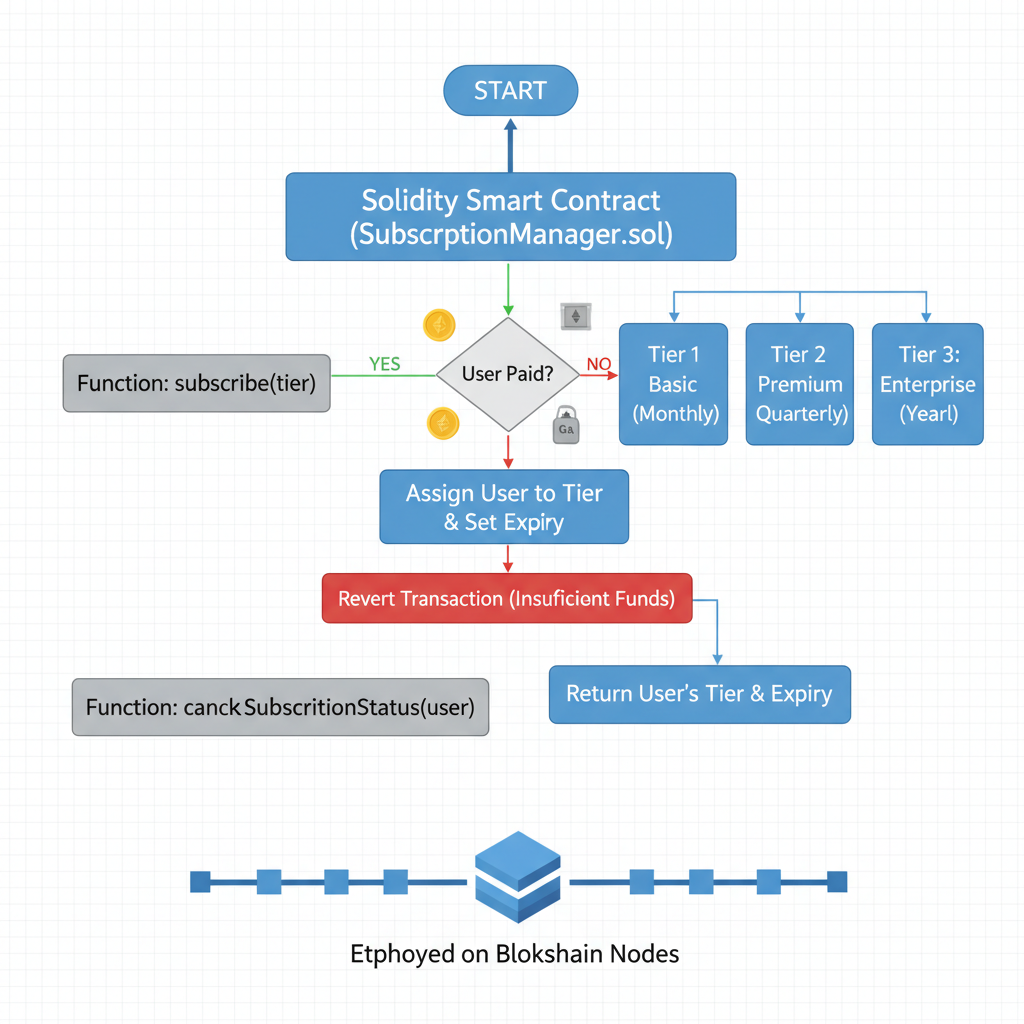

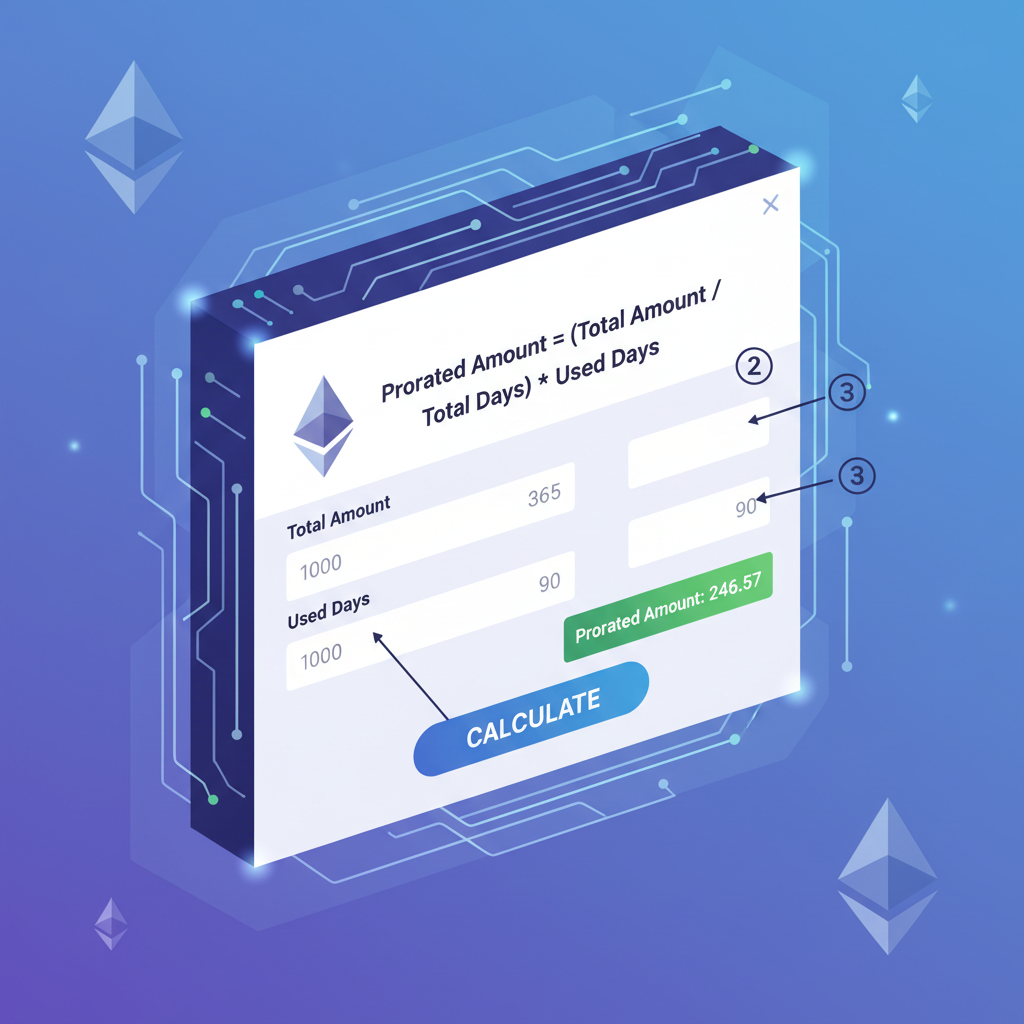
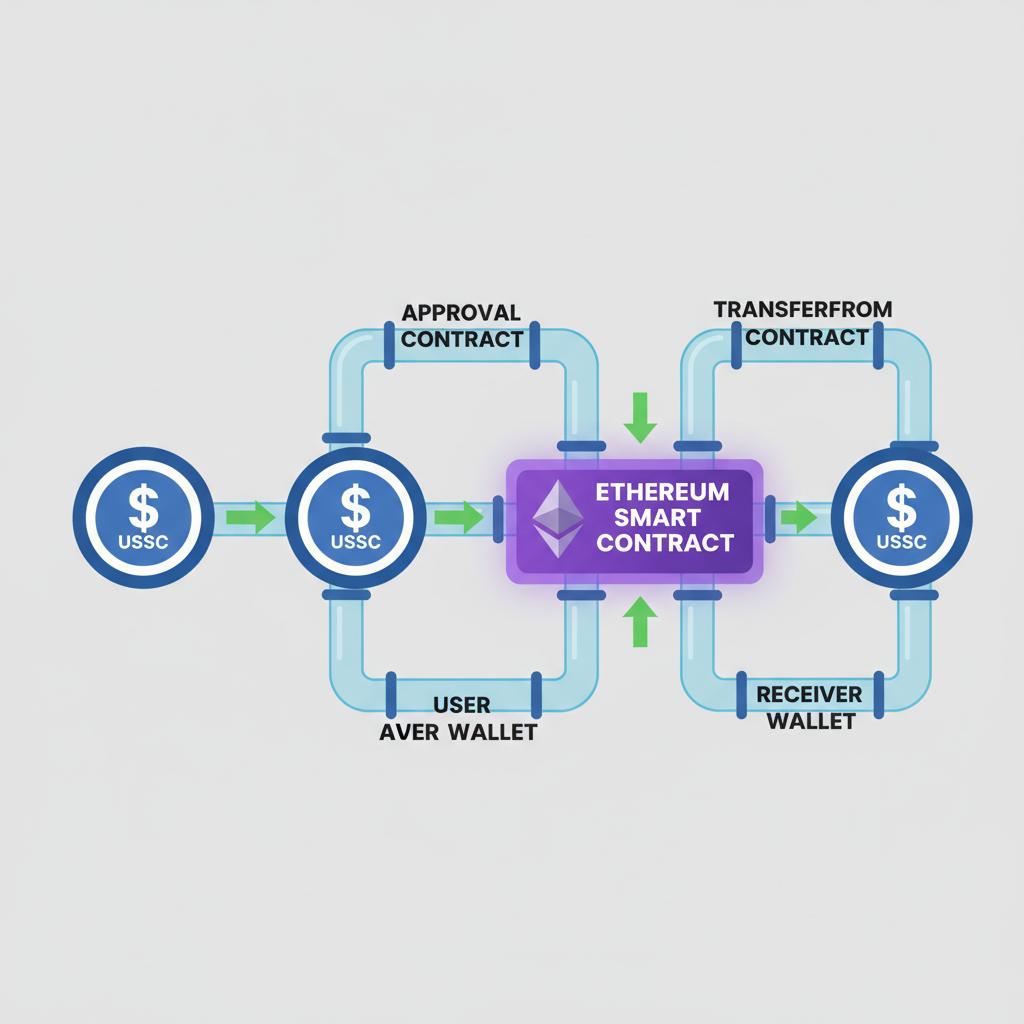
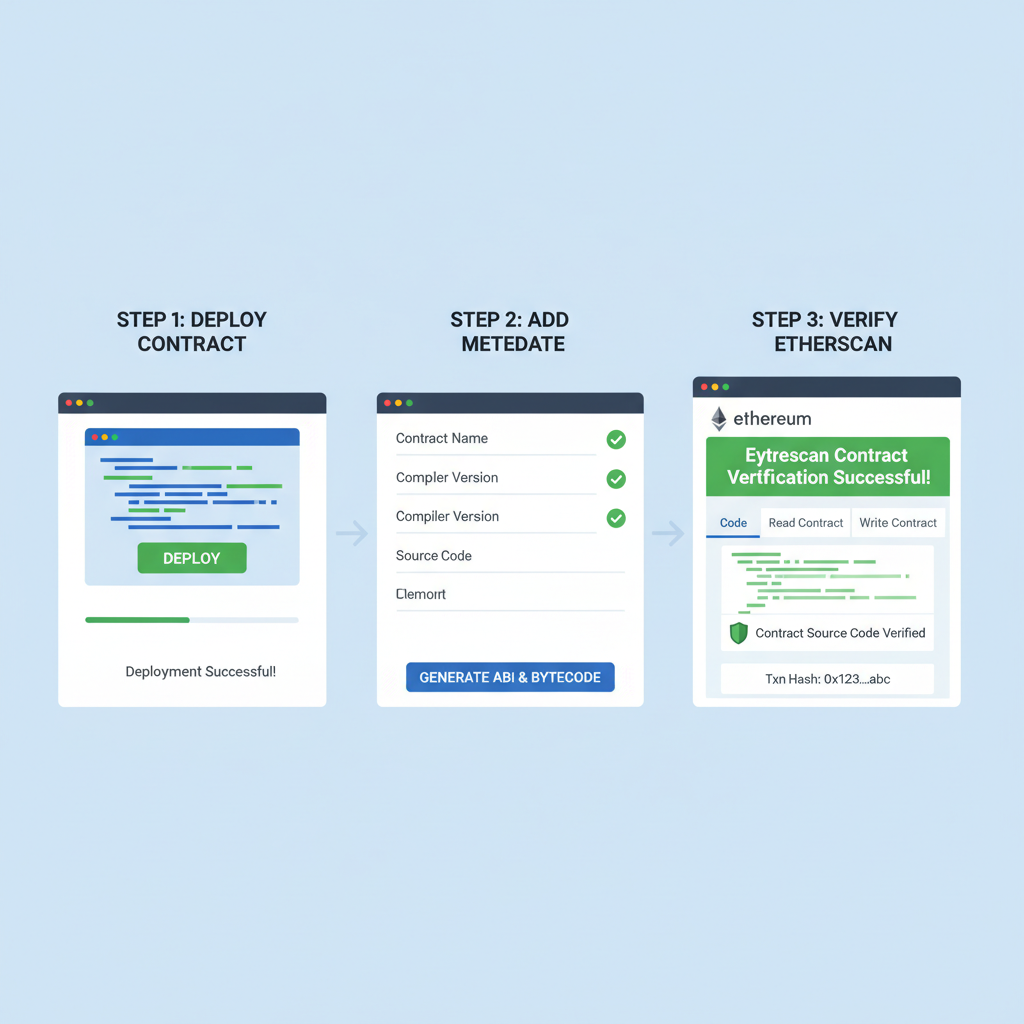
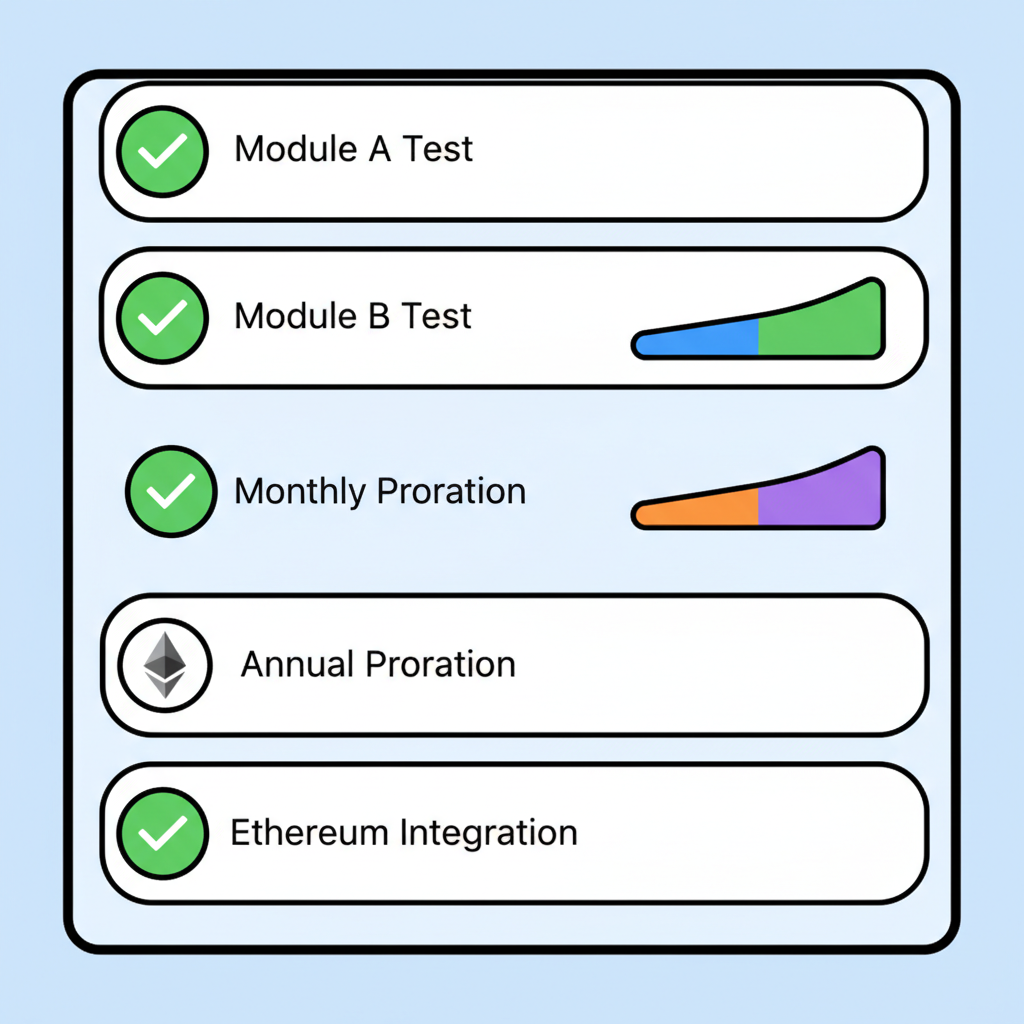
Once deployed, test rigorously across scenarios: upgrades mid-week, downgrades near cycle end, even cancellations with refunds. Tools like Foundry or Hardhat simulate these, ensuring your contract behaves as intended before mainnet exposure. This methodical build aligns with broader SaaS blockchain billing shifts, where precision trumps volume.
At the code level, here’s a distilled Solidity example for the proration engine. It computes partial periods based on block timestamps, a nod to Ethereum’s deterministic finality.
Onchain Proration Logic for Plan Changes
To enable seamless plan changes in onchain subscriptions, the smart contract computes prorated USDC amounts based on time elapsed in the billing cycle. This approach ensures precise, fair adjustments without relying on offchain oracles.
```solidity
pragma solidity ^0.8.0;
import "@openzeppelin/contracts/token/ERC20/IERC20.sol";

contract SubscriptionProration {
    uint256 constant SECONDS_PER_MONTH = 30 days;
    IERC20 public immutable usdc;

    mapping(uint256 => uint256) public planPricePerMonth; // USDC wei (6 decimals)

    constructor(IERC20 _usdc) {
        usdc = _usdc;
    }

    /**
     * Calculates prorated USDC net payment for plan change.
     * Positive: charge user; Negative: refund user (handle separately).
     */
    function calculateProration(
        uint256 oldPlanId,
        uint256 newPlanId,
        uint256 cycleStart,
        uint256 currentTime
    ) public view returns (int256 netUsdcAmount) {
        uint256 timeElapsed = currentTime > cycleStart ? currentTime - cycleStart : 0;
        uint256 timeRemaining = SECONDS_PER_MONTH > timeElapsed ? SECONDS_PER_MONTH - timeElapsed : 0;

        uint256 oldPricePerMonth = planPricePerMonth[oldPlanId];
        uint256 newPricePerMonth = planPricePerMonth[newPlanId];

        uint256 oldUsedCharge = (oldPricePerMonth * timeElapsed) / SECONDS_PER_MONTH;
        uint256 oldRemainingCredit = (oldPricePerMonth * timeRemaining) / SECONDS_PER_MONTH;
        uint256 newRemainingCharge = (newPricePerMonth * timeRemaining) / SECONDS_PER_MONTH;

        netUsdcAmount = int256(newRemainingCharge) - int256(oldRemainingCredit);
    }

    // Example usage: execute plan change with proration
    function upgradePlan(address user, uint256 oldPlanId, uint256 newPlanId, uint256 cycleStart, uint256 currentTime) external {
        int256 netAmount = calculateProration(oldPlanId, newPlanId, cycleStart, currentTime);
        if (netAmount > 0) {
            usdc.transferFrom(user, address(this), uint256(netAmount));
        } else if (netAmount < 0) {
            usdc.transfer(user, uint256(-netAmount));
        }
        // Update subscription state...
    }
}
```
By embedding this logic directly in the contract, we achieve atomic execution of proration alongside USDC transfers, minimizing disputes and enhancing user trust in Ethereum-based SaaS billing.
Such code integrates seamlessly with platforms like SubscribeOnChain, handling the nuances of Ethereum recurring subscriptions. For full setups, explore this practical setup guide. Developers report deployment in under a week, with gas fees offset by reduced support tickets.
Edge Cases and Scaling: Beyond Basic Proration
Real-world SaaS isn't linear. Volume discounts, seat additions, or usage spikes demand layered logic. Smart contracts layer these via modifiers: prorate base fees, then adjust metered usage proportionally. Stablecoins shine here, pegging credits to USDC for instant swaps, sidestepping ETH's swing from $1,757.03 to $2,139.54 in a day.
Scaling introduces oracles for hybrid signals, like API usage data fed onchain. Compliance layers in too: emit events for ASC 606 timestamps, turning ledgers into evidentiary gold. Early movers like Figment demonstrate this, distributing shares without reconciliation drudgery. It's strategic positioning, fortifying against regulatory headwinds while delighting users who prize verifiability.
Onchain billing systems comply with ASC 606 by recognizing revenue as services are delivered, with immutable timestamps simplifying audits.
Challenges persist, sure. Gas optimization matters as subscriptions proliferate; batch proration txns via multicalls. Failed payments? Automate retries with meta-transactions, preserving decentralized SaaS payments flow. GitHub discussions highlight workarounds for true opt-outs, but proration bridges the gap, making recurring models viable today.
Zoom out, and onchain subscription proration emerges as Ethereum's quiet differentiator for SaaS. In a $1,941.42 ETH landscape, it stabilizes revenue amid volatility, builds moats through transparency, and invites global scale without intermediaries. Providers adopting now don't just bill; they architect loyalty. Forward-thinking teams will layer AI-driven predictions atop this, forecasting churn from proration patterns. The chain rewards patience and precision, much like long-term holdings in turbulent markets.
Equip your SaaS with these tools, and watch mid-cycle changes fuel growth, not friction. Ethereum's ledger ensures every prorated cent counts toward sustainable expansion.
About the Author