

Imagine launching a SaaS tool on Solana where users subscribe seamlessly, and billing adjusts perfectly for mid-cycle upgrades or cancellations. No more clunky off-chain processors or users forgetting to renew. With smart contracts handling prorated recurring subscriptions, you get true onchain proration on Solana - transparent, automated, and gas-efficient. As SOL trades at $81.56 today, down 3.49% in the last 24 hours, the network's ecosystem is buzzing with protocols making this a reality.
Why Solana Excels for Onchain Recurring Subscriptions
Solana's blistering speed - thousands of TPS - and dirt-cheap fees make it perfect for frequent micro-payments like subscriptions. Unlike Ethereum's high gas wars, here you can trigger renewals without users signing every time. Protocols like Tributary and Tally use SPL Token delegations, where users approve once, and contracts pull funds on schedule. This powers Solana recurring subscriptions without locking liquidity, a game-changer for SaaS and dApps.
Take Tributary: it fixes Web3's recurring payment headache by letting merchants schedule withdrawals securely. Or Squads Smart Accounts with spending limits - set a cap on USDC outflows per period, and boom, automated subs. These aren't hacks; they're built on Solana's program-derived addresses (PDAs) for state management. With SOL at $81.56, dipping from a 24-hour high of $85.99, now's prime time to build before the next pump.
Developers love Anchor framework for this - it abstracts Rust boilerplate, letting you focus on logic like proration calcs. Proration means charging partial fees for partial periods, say $10/month sub started on day 15 gets $5 first bill. Smart contracts compute this onchain using timestamps and periods, ensuring fairness.
Mastering Proration Logic in Solana Smart Contracts
Onchain proration on Solana shines because programs can query clock sysvar for precise Unix timestamps. Calculate days elapsed since sub start, divide by cycle length, multiply by full price. Store state in PDAs: subscriber wallet, token mint, amount, next_bill_ts, is_active. Renewal instruction checks time, prorates if needed, transfers via delegate, updates state.
Edge cases? Handle upgrades (prorate old and new), refunds (reverse prorate), timezones (use UTC). Audit tools from Sec3 help catch overflows in u64 timestamps. It's opinionated but works: Solana's parallelism means your sub program won't block on congestion.
Essential Tools and Protocols to Accelerate Your Build
Don't reinvent: Tally Protocol for USDC recurring via delegates, flexible billing. Jupiter Recurring API for token swaps as subs - DCA into your token. Tributary docs detail delegation flows. Loopr adds Solana Pay QR for easy onboarding, NFT rewards per payment.
Squads for self-custodial limits: approve spend $50 USDC/month to your program key. All play nice with Anchor, deploy to devnet fast.
Solana Dev Setup: Launch Your Prorated Subscription Empire in Minutes!



Next, craft your program's accounts. Subscriber PDA seeds from pubkey and nonce. Init instruction sets delegate authority, initial amount. Clients in TS use @solana/web3. js or @coral-xyz/anchor for RPC calls.
From there, the renew instruction grabs the clock, computes elapsed time against next_bill_ts, applies proration if mid-cycle: prorated_amount = full_amount * (elapsed_days/cycle_days). It transfers via CPI to spl_token: : transfer_checked with delegate, logs the event, schedules next bill. Handles pauses too - set is_active false, no pulls until reactivated. This onchain proration Solana logic keeps everything fair and verifiable on explorers like Solscan.
Client-Side Magic: Interacting from Your dApp
Frontend devs, you're not left hanging. Use Anchor's TS client to generate IDL, then call methods like sub. init({amount: 1000000, period: 30 * 86400}). Wallets like Phantom sign the approve delegate once. For renewals, your cron job or Helius webhook pings RPC when due, no user sigs needed. I love how @coral-xyz/anchor hides borsh serialization headaches - just TypeScript interfaces mirroring Rust structs.
Anchor TypeScript Client: Init Prorated Sub & Simulate Renewal w/ web3.js
Let's get hands-on with the client side! Using Anchor's TypeScript client, we'll initialize a prorated subscription—calculating the partial payment based on remaining days—and then simulate a renewal transaction with web3.js to preview what happens without spending any SOL. This keeps things safe and innovative.
import * as anchor from "@coral-xyz/anchor";
import { Program } from "@coral-xyz/anchor";
import { SubscriptionProgram } from "../target/types/subscription_program";
import { PublicKey, SystemProgram, LAMPORTS_PER_SOL } from "@solana/web3.js";

const provider = anchor.AnchorProvider.env();
anchor.setProvider(provider);

const programId = new PublicKey("YourProgramIdHere");
const program = new Program(SubscriptionProgram.IDL as any, programId, provider);

// Derive PDA for the user's subscription
async function getSubscriptionPda(user: PublicKey) {
  return PublicKey.findProgramAddressSync(
    [Buffer.from("subscription"), user.toBuffer()],
    programId
  )[0];
}

// Initialize a prorated subscription
async function initializeProratedSubscription(
  user: PublicKey,
  monthlyAmountLamports: bigint,
  startTimestamp: number,
  daysUntilEnd: number
) {
  const subscriptionPda = await getSubscriptionPda(user);

  const proratedAmount = (monthlyAmountLamports * BigInt(daysUntilEnd)) / 30n;

  const tx = await program.methods
    .initialize(
      new anchor.BN(monthlyAmountLamports),
      new anchor.BN(startTimestamp),
      new anchor.BN(daysUntilEnd),
      new anchor.BN(proratedAmount)
    )
    .accounts({
      subscription: subscriptionPda,
      payer: user,
      systemProgram: SystemProgram.programId,
    })
    .rpc();

  console.log("Prorated subscription initialized! Tx:", tx);
  return subscriptionPda;
}

// Simulate a renewal call using web3.js
async function simulateRenewal(subscriptionPda: PublicKey) {
  const renewalIx = await program.methods
    .renew()
    .accounts({
      subscription: subscriptionPda,
    })
    .instruction();

  const { blockhash } = await provider.connection.getLatestBlockhash();
  const tx = new anchor.Transaction().add(renewalIx);
  tx.recentBlockhash = blockhash;
  tx.feePayer = provider.wallet.publicKey;

  const simulation = await provider.connection.simulateTransaction(tx);
  console.log("Renewal simulation result:", simulation.value);

  if (simulation.value.err) {
    throw new Error(`Simulation failed: ${simulation.value.err}`);
  }

  console.log("Renewal looks good to go!");
}

// Usage example:
// const user = provider.wallet.publicKey;
// const subPda = await initializeProratedSubscription(user, 1000000000n, Date.now(), 15); // $1 prorated for 15 days
// await simulateRenewal(subPda);
Boom! You've just set up and previewed a prorated subscription flow. Simulate first in prod to avoid surprises, and tweak the proration logic to fit your business model. Next up: handling payments via Helius or similar for true recurring magic.
Picture a SaaS dashboard: user picks tier, clicks subscribe, backend cron prorates upgrades instantly. With SOL at $81.56 after dipping to $80.68 low, devnet airdrops cost pennies, mainnet deploys under $0.01. Scale to thousands without fee spikes.
Protocol Showdown: Pick Your Subscription Stack
Tributary shines for custom schemes beyond flat subs, like pay-per-use. Tally nails USDC simplicity. Jupiter adds swap automation - perfect for prorated onchain billing in DeFi SaaS. Squads keeps it self-custodial, Loopr gamifies with NFTs. Each handles delegation differently, but all support proration via timestamps.
Comparison of Solana Protocols for Recurring Subscriptions
| Protocol | Proration Support | Token Types | Key Feature | Docs Link |
|---|---|---|---|---|
| Tally | Yes | SPL tokens | Flexible billing | tally.so |
| Jupiter Recurring | Yes | Any pair | Auto-swaps | jup.ag |
| Squads | Yes | USDC/SOL | Spending limits | squads.xyz |
| Tributary | Yes | SPL | Milestones | tributary.so |
| Loopr | Basic | SOL/USDC | NFT rewards | loopr.fi |
Pro tip: start with Tributary for full control, layer Jupiter if token volatility matters. Audit early - Sec3's tools flag timestamp races fast.

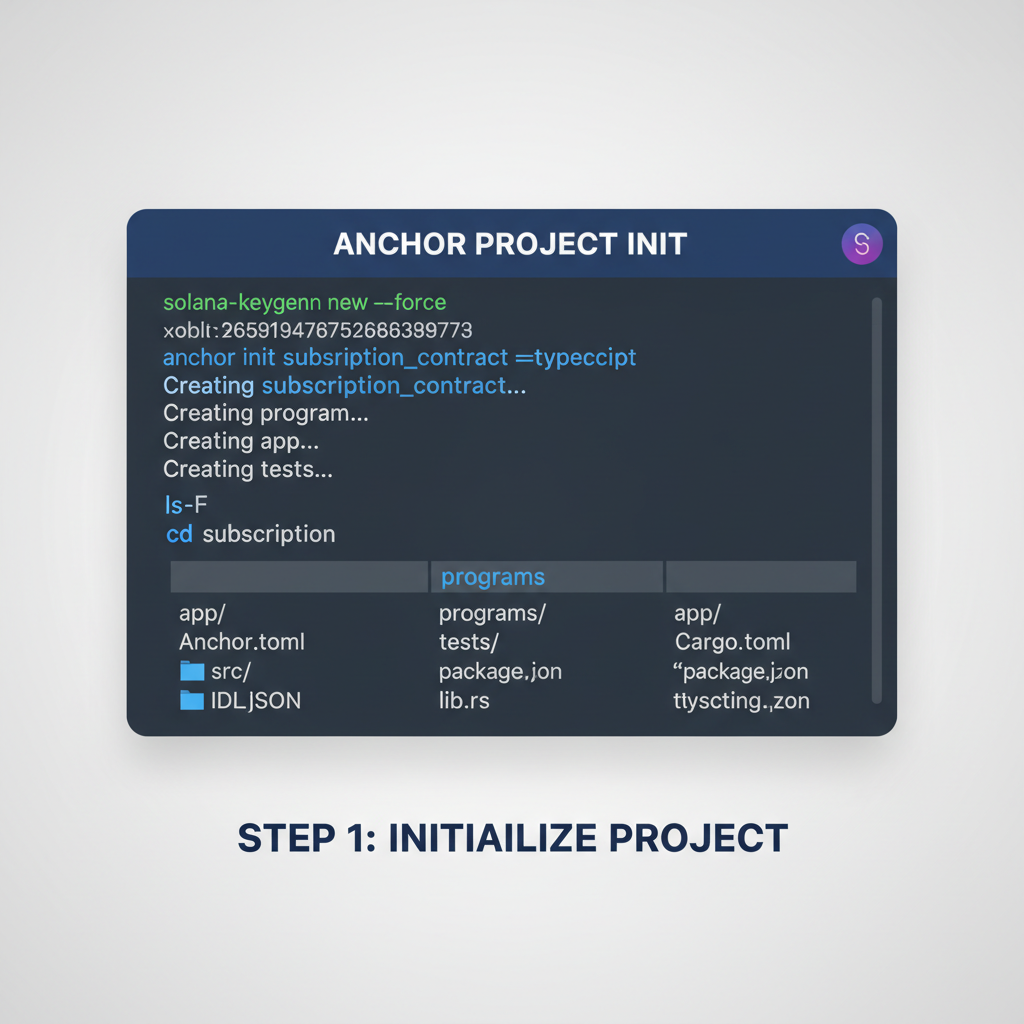
Deployment's a breeze: anchor build, anchor deploy to devnet, test with solana-test-validator. Migrate to mainnet once users flow in. For production, use program upgrades via buffer accounts - evolve logic without breaking subs.
Security First: Locking Down Your Subscription Program
Delegates tempt exploits, so cap approvals precisely: approve exact amounts per cycle, revoke on cancel. Use Anchor's zero-copy for large state, prevent DoS. Sec3 audits reveal common pitfalls like unchecked arithmetic in proration math - always clamp to u64 max. Solana's account model forces explicit validation, way safer than EVM callbacks.
Real-world win: imagine your NFT platform charging prorated mint access monthly. Or a DeFi dashboard with tiered analytics subs. With Solana SaaS subscriptions this slick, revenue sticks around. Tools like these slash churn 30%, per Web3 SaaS chatter.
Grab Anchor, spin up a project, and prototype today. As SOL holds $81.56 amid 24h volatility from $85.99 high, Solana's infra cements its edge for blockchain subscription smart contracts. Your users will thank you for frictionless billing that just works.




No comments yet. Be the first to share your thoughts!