

In the fast-evolving world of decentralized finance, onchain prorated subscriptions for stablecoins are reshaping how businesses handle recurring billing. Platforms now enable seamless, automated payments using USDC or USDT directly from user wallets, without custodians holding funds. This approach, highlighted by Stripe's October 2025 rollout on Ethereum, Polygon, Base, and Solana, allows customers to authorize smart contracts for recurring charges, bypassing repeated signatures and fiat conversion headaches.
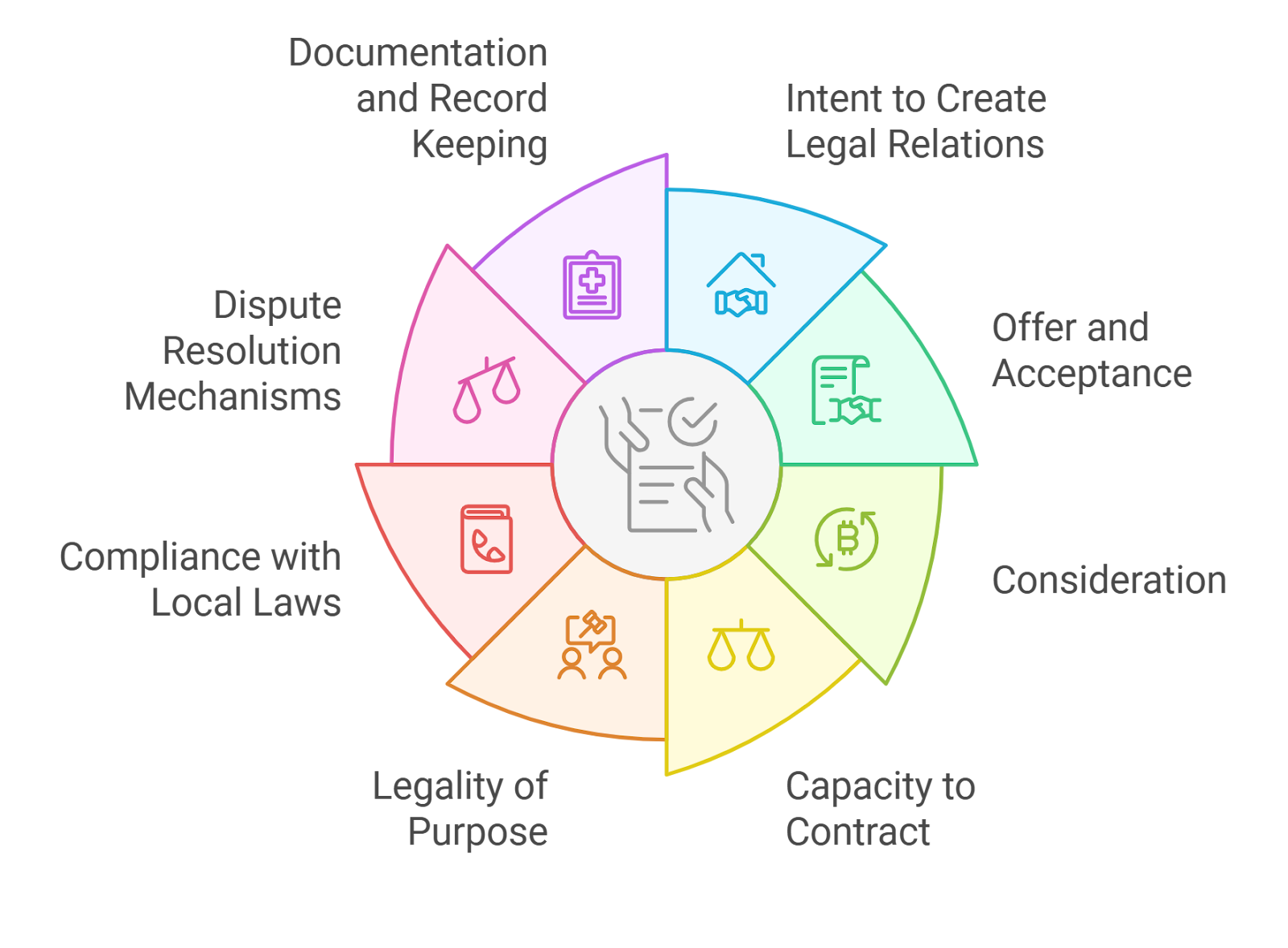
Businesses benefit from near-instant settlements and low fees, while customers enjoy predictable pricing pegged to fiat values. Non-custodial designs ensure users retain control over their assets, reducing risks associated with centralized platforms. As stablecoins like USDC and USDT dominate over 98% of the market, their integration into subscription models via smart contracts unlocks global accessibility without borders or banking hours.
Stablecoins Power Transparent Recurring Payments
Stablecoins address volatility plaguing traditional crypto payments, offering price stability crucial for recurring payments blockchain proration. USDC and USDT settle transactions swiftly across chains, with costs fractions of card fees. Platforms like Genpaid integrate these as payment rails alongside cards, requiring no blockchain overhauls or custodial licenses. Merchants go live quickly, expanding to crypto-native audiences.
Stablecoin invoicing delivers near-instant settlement, low-cost transactions, and global operability.
This efficiency shines in SaaS and Web3 services, where predictable billing builds trust. Non-custodial gateways, such as those from HamBit, provide gasless USDT and USDC acceptance with no-code setups, fostering Web3 merchant ecosystems.
Consider a content creator offering tiered plans: subscribers authorize wallet pulls for prorated amounts mid-cycle, all verified onchain. This transparency minimizes disputes, as every transaction lives immutably on the ledger.
Proration Mechanics in Smart Contract Subscriptions
Non-custodial stablecoin billing excels with automated proration, calculating fair charges for plan upgrades or downgrades within billing cycles. Smart contracts execute these adjustments precisely, dividing fees by time used and crediting remainders instantly. Unlike offchain systems prone to errors, onchain logic ensures atomic, verifiable computations.
For instance, switching from a $20 monthly to a $30 plan after 15 days yields a prorated bill of $25: half the old rate plus half the new. Platforms like Smarty Pay embed this via flexible smart contracts, supporting trials, pauses, and discounts across USDT and USDC.
Explore proration details for SaaS projects.- Time-based allocation: Pro-rate by days or usage metrics.
- Credit carryover: Apply unused portions to future cycles.
- Multi-chain support: Seamless across EVM-compatible networks.
This methodical approach enhances retention, as users perceive fairness in every adjustment. SubscribeOnChain. com pioneers these features, streamlining USDC USDT subscriptions onchain for developers.
Non-Custodial Platforms Driving Adoption
Leading solutions prioritize user sovereignty. Stripe's unified dashboard now manages fiat and stablecoin subscriptions, processing authorizations via saved wallets. TransFi automates settlements in fiat-backed crypto, while NOWPayments handles recurring invoicing for broader crypto acceptance.
Genpaid stands out for SaaS integrations, adding stablecoins without infrastructure rewrites. Smarty Pay's smart contracts offer granular controls, ideal for dynamic pricing. These tools collectively lower barriers, enabling even small teams to deploy robust SubscribeOnChain proration guide compliant systems.
| Platform | Key Feature | Chains Supported |
|---|---|---|
| Stripe | Recurring USDC | Ethereum, Polygon, Base, Solana |
| Genpaid | Non-custodial rail | Multichain |
| Smarty Pay | Proration and amp; trials | Multiple |
These platforms demonstrate the maturity of onchain prorated subscriptions, but true power emerges when developers harness them directly. SubscribeOnChain. com equips builders with tools to deploy custom logic, ensuring precise recurring payments blockchain proration tailored to specific needs.
Building Your First Prorated Subscription Smart Contract
Start with a non-custodial setup on Polygon or Base for low fees and EVM compatibility. Smart contracts handle authorization, pull payments, and prorate dynamically based on timestamps. This eliminates intermediaries, letting users approve once via wallet signatures.
Deploy Non-Custodial Stablecoin Prorated Subscriptions Onchain
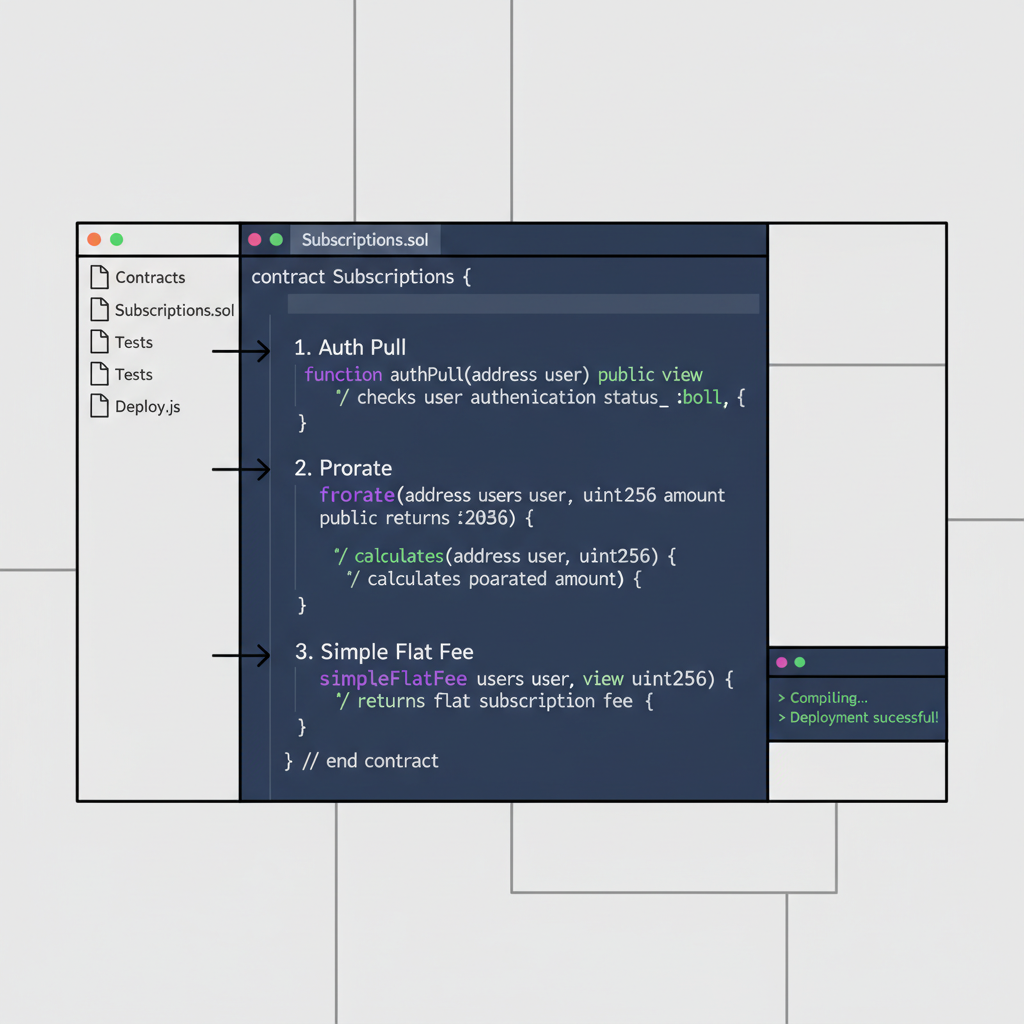
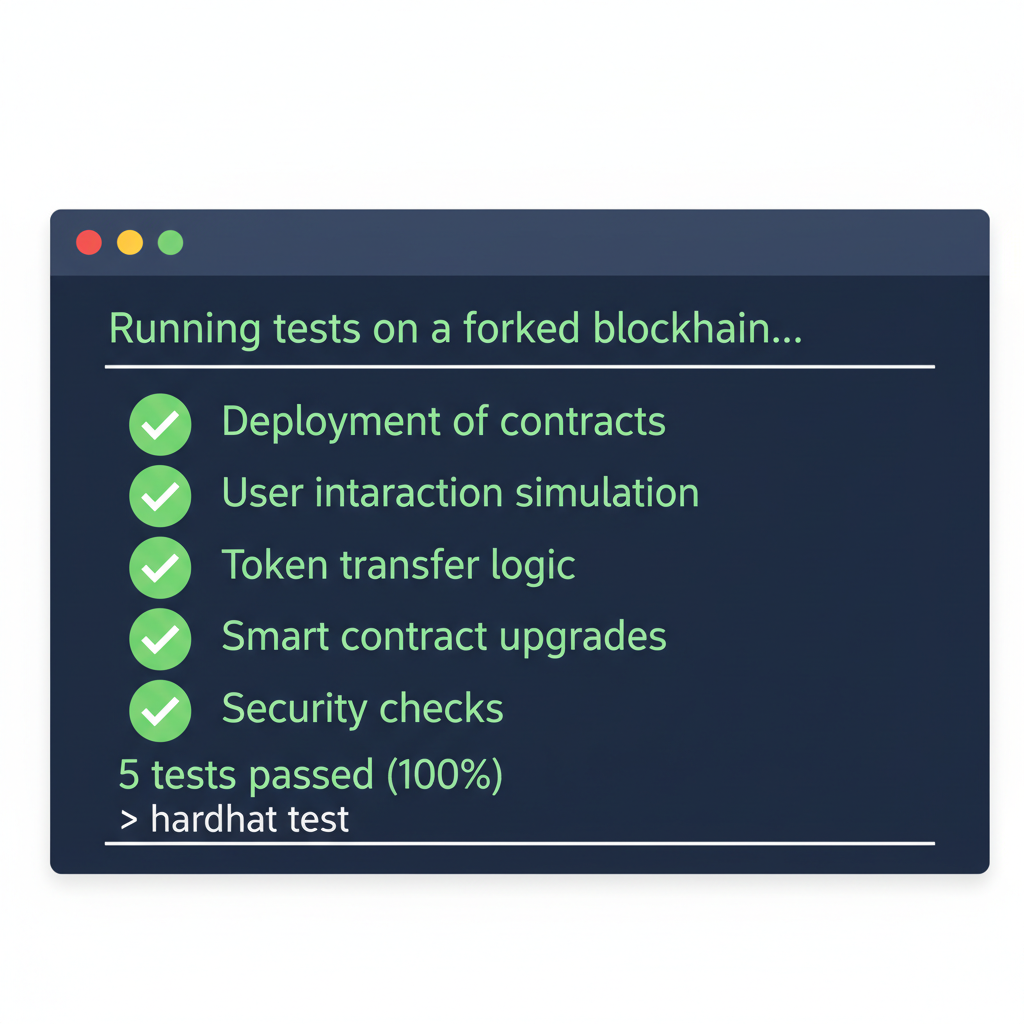
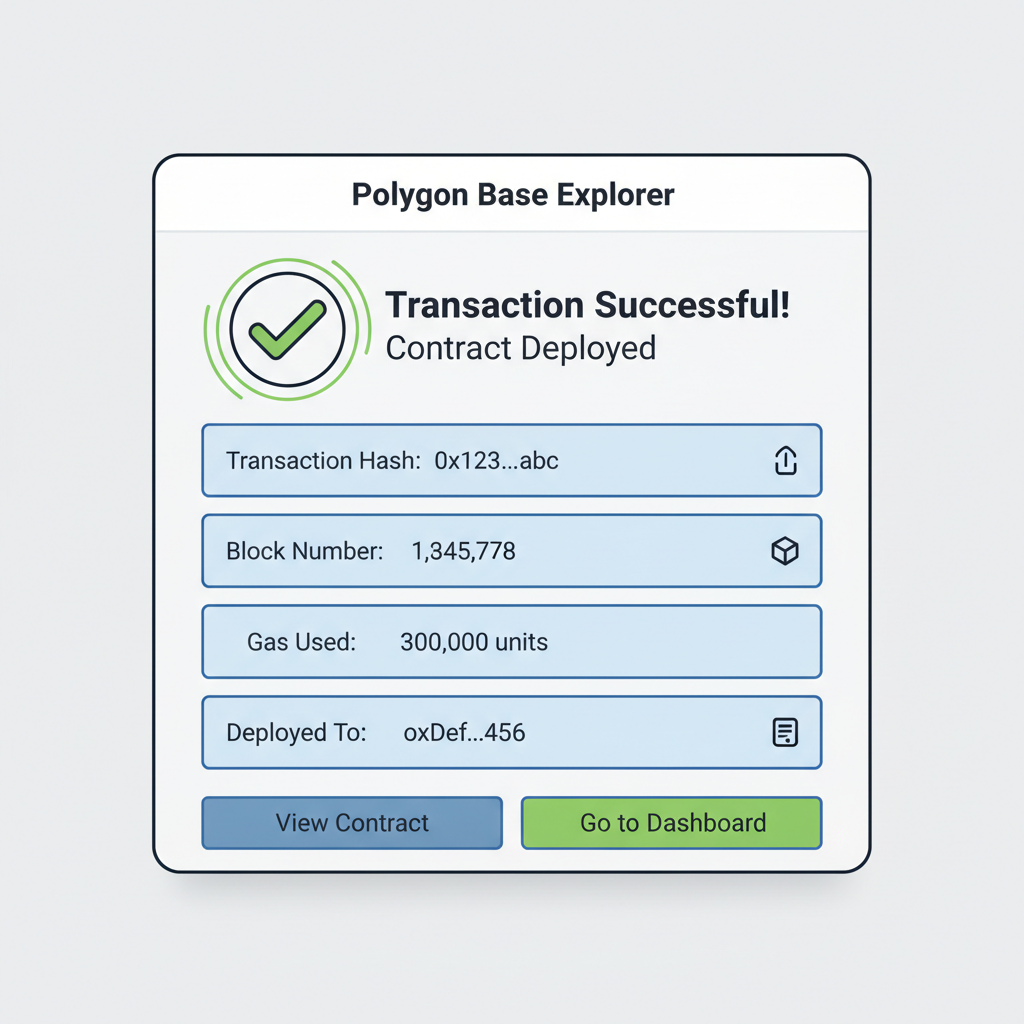

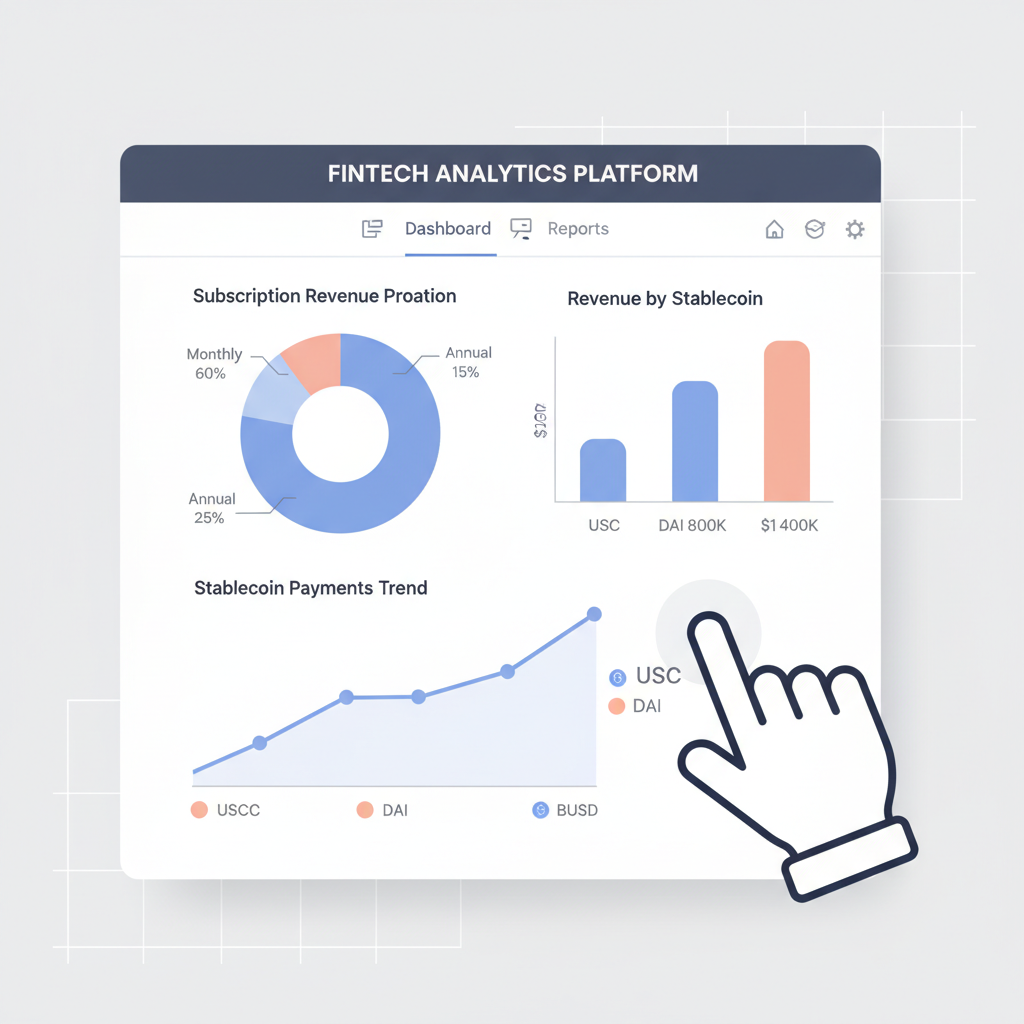
Once deployed, customers connect wallets, select plans, and authorize pulls. Contracts query block timestamps for pro-rata splits, transferring exact USDC or USDT amounts. Developers monitor via events, with dashboards aggregating data offchain for UX.
calculateProratedAmount Function
To implement prorated billing in the subscription contract, use this pure function. It calculates the total amount due for the current cycle by applying the old rate to the elapsed time since cycleStart and the new rate to the remaining time until cycleEnd, based on the currentTime of the rate change.
```solidity
function calculateProratedAmount(
    uint256 currentTime,
    uint256 cycleStart,
    uint256 cycleEnd,
    uint256 oldRate,
    uint256 newRate
) public pure returns (uint256) {
    uint256 cycleDuration = cycleEnd - cycleStart;
    if (cycleDuration == 0) return 0;

    uint256 timePassed = currentTime > cycleStart ? currentTime - cycleStart : 0;
    uint256 timeRemaining = cycleEnd > currentTime ? cycleEnd - currentTime : 0;

    uint256 proratedOld = (oldRate * timePassed) / cycleDuration;
    uint256 proratedNew = (newRate * timeRemaining) / cycleDuration;

    return proratedOld + proratedNew;
}
```
This calculation uses integer arithmetic for precision on-chain, flooring divisions to conservatively estimate amounts and prevent overcharges. The function handles edge cases like zero-duration cycles and ensures time bounds are respected.
Such precision shines in SaaS scenarios. A user upgrading mid-cycle receives credit for unused time, applied instantly. This fosters loyalty, as adjustments feel equitable and verifiable on explorers like Polygonscan.
See Polygon-Stripe hybrid implementation.Challenges persist, like optimizing gas for frequent pulls or handling chain congestion. Yet, layer-2 scaling and account abstraction mitigate these, pushing adoption forward. Platforms like SubscribeOnChain. com abstract complexities, offering plug-and-play modules for proration logic.
Real-World Wins and Metrics
Early adopters report 30% lower churn from transparent billing. A Web3 analytics firm using Smarty Pay-like contracts saw disputes drop to zero, as users self-audit via blockchain. Stripe's rollout processed millions in USDC subscriptions within months, validating the model.

| Metric | Offchain (Traditional) | Onchain (Stablecoin) |
|---|---|---|
| Settlement Time | 3-5 days | and lt;1 minute |
| Fees | 2.9% and $0.30 | 0.1-0.5% |
| Custody Risk | High | None |
| Proration Accuracy | Manual/error-prone | Automated/smart contract |
These gains extend to global reach. Freelancers in emerging markets bill clients in USDT without forex losses, while DAOs fund operations via member subs. Proration ensures fairness during governance votes or treasury reallocations.
Looking ahead, integrations with AI oracles could enable usage-based proration, billing per API call or compute unit in real-time. Combined with zero-knowledge proofs for privacy, non-custodial stablecoin billing edges closer to mainstream SaaS parity.
SubscribeOnChain SaaS setup blueprint.Businesses ignoring this shift risk obsolescence. Those embracing it capture crypto-native revenue streams, blending Web2 familiarity with Web3 trustlessness. Deploy today, and watch subscriptions flow predictably onchain.




No comments yet. Be the first to share your thoughts!