

Imagine you're running a thriving Web3 SaaS platform, where users mint NFTs for exclusive access or stake tokens for premium analytics. One day, a loyal customer emails: 'I need to upgrade my plan mid-month because my team just expanded. ' In traditional billing systems, this triggers a cascade of manual adjustments, disputes over partial credits, and frustrated support teams. But in the blockchain world, where every transaction is immutable and transparent, handling such mid-cycle changes demands a smarter approach. Enter onchain proration for recurring subscriptions blockchain - a mechanism that slices billing with the precision of a smart contract, ensuring users pay only for what they use.
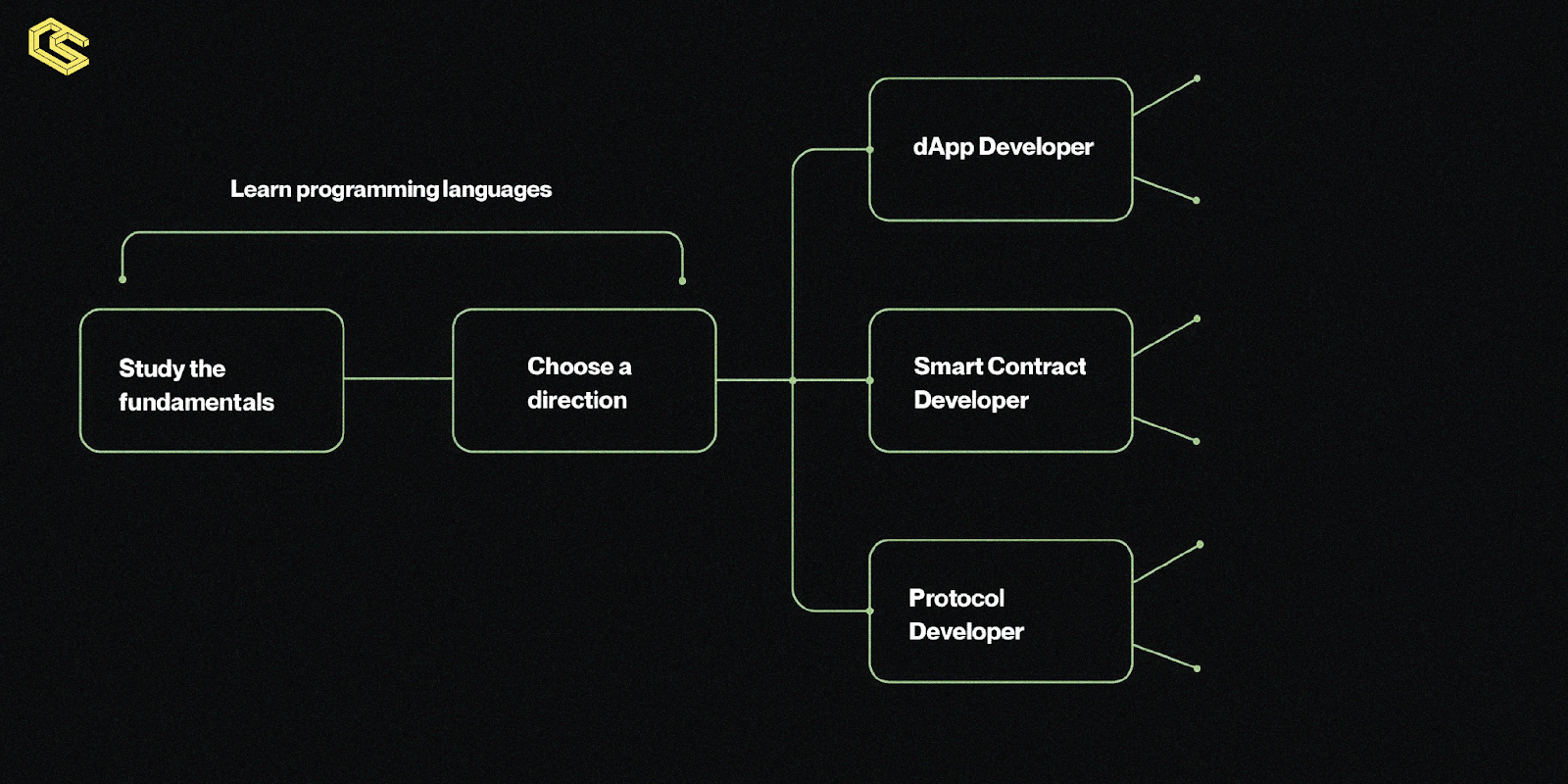
This isn't just theory. Platforms like SubscribeOnChain are pioneering web3 billing proration, turning what was once a logistical nightmare into a seamless, trust-building feature. Picture the power user upgrading seamlessly: the contract detects the change, calculates days used on the old plan, credits the remainder, and applies it instantly to the new tier. No overcharges, no refunds needed, all etched onchain for eternity.
The Pain of Partial Periods in Decentralized Billing
Recurring subscriptions have exploded in Web3, powering everything from decentralized content platforms to AI-driven DeFi tools. Yet, onchain subscription adjustments expose a glaring gap. Traditional SaaS giants like Stripe handle proration offchain, relying on centralized databases prone to errors and opacity. Users upgrading mid-cycle often face full-month charges upfront, with credits promised later - a recipe for churn.
In blockchain's transparent ethos, this feels archaic. High gas fees and signing friction once made true recurring payments elusive, as noted by Sphere Labs. But advancements in EVM chains like Base and Polygon have slashed costs, making blockchain prorated billing viable. Still, without proration, a user switching plans on day 15 of a 30-day cycle either loses half their value or burdens you with offchain compensations.

Consider a real-world parallel: Reddit threads in r/SaaS buzz with questions on crypto subscriptions - 'How do you handle refunds and partials?' The answer? Manual workarounds that erode margins. Onchain proration flips the script, automating fairness at the protocol level.
Smart Contracts That Prorate with Precision
At its core, decentralized SaaS billing via proration leverages smart contracts to monitor subscription states in real-time. When a user initiates an upgrade - say, from basic to pro - the contract performs a series of atomic operations. First, it timestamps the request against the current billing cycle. Then, it computes the prorated amount: (days used/total days) * old plan fee, subtracted from the new plan's full fee.
This isn't guesswork; it's mathematical certainty encoded in Solidity or Vyper. SubscribeOnChain details how these contracts detect changes, calculate usage, adjust payments, and log everything onchain. The result? Users see immediate transparency via explorers like Etherscan, fostering loyalty in a trust-scarce ecosystem.
Real-World Wins: From Upgrades to Downgrades
Let's dive deeper into a narrative from the trenches. A digital content creator on a Web3 platform subscribes monthly for $50 storage. On day 10, booming demand prompts a downgrade to economize. Without proration, they'd forfeit 20 days' value. With onchain logic, the contract refunds the unused portion instantly, crediting future cycles or withdrawing to their wallet.
This bidirectional handling - upgrades crediting forward, downgrades refunding immediately - sets onchain proration apart. It's not just fair; it's revenue-protective. Businesses retain users wary of rigid billing, while smart contracts eliminate the 5-10% error rate plaguing manual systems. For more on setup, check this guide.
Developers appreciate the composability too. Integrate with Polygon for low-fee executions or Base for EVM compatibility, as outlined in 2025 guides. The transparency aligns perfectly with Web3's ethos, where auditable records build moats against competitors stuck in Web2 billing.
Building this into your Web3 SaaS doesn't require reinventing the wheel. Platforms like SubscribeOnChain provide battle-tested templates, but understanding the mechanics empowers customization. The key lies in event-driven contracts that listen for upgrade or downgrade signals from user wallets, then execute proration atomically to avoid race conditions.
Step-by-Step: Deploying Proration in Your Smart Contracts
Deploy Onchain Proration: Handle Mid-Cycle Subscription Changes Seamlessly
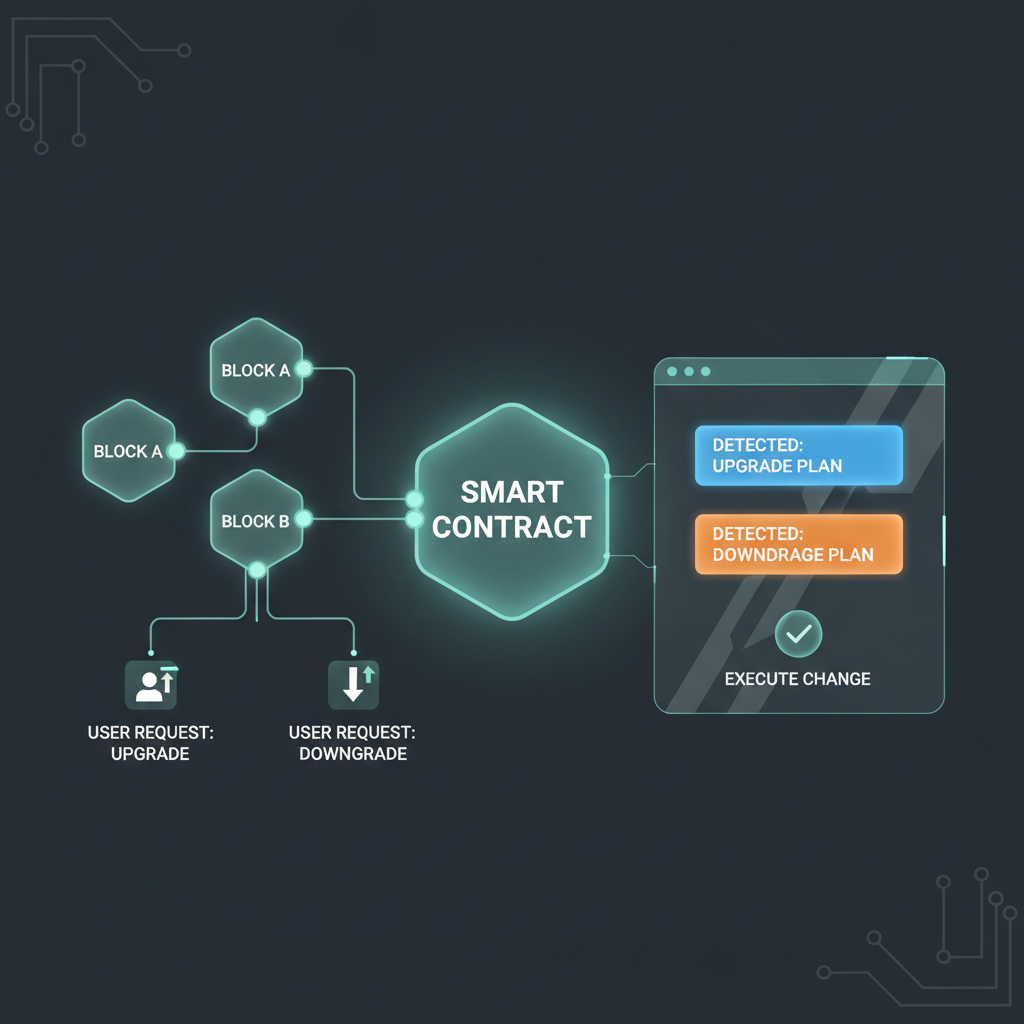
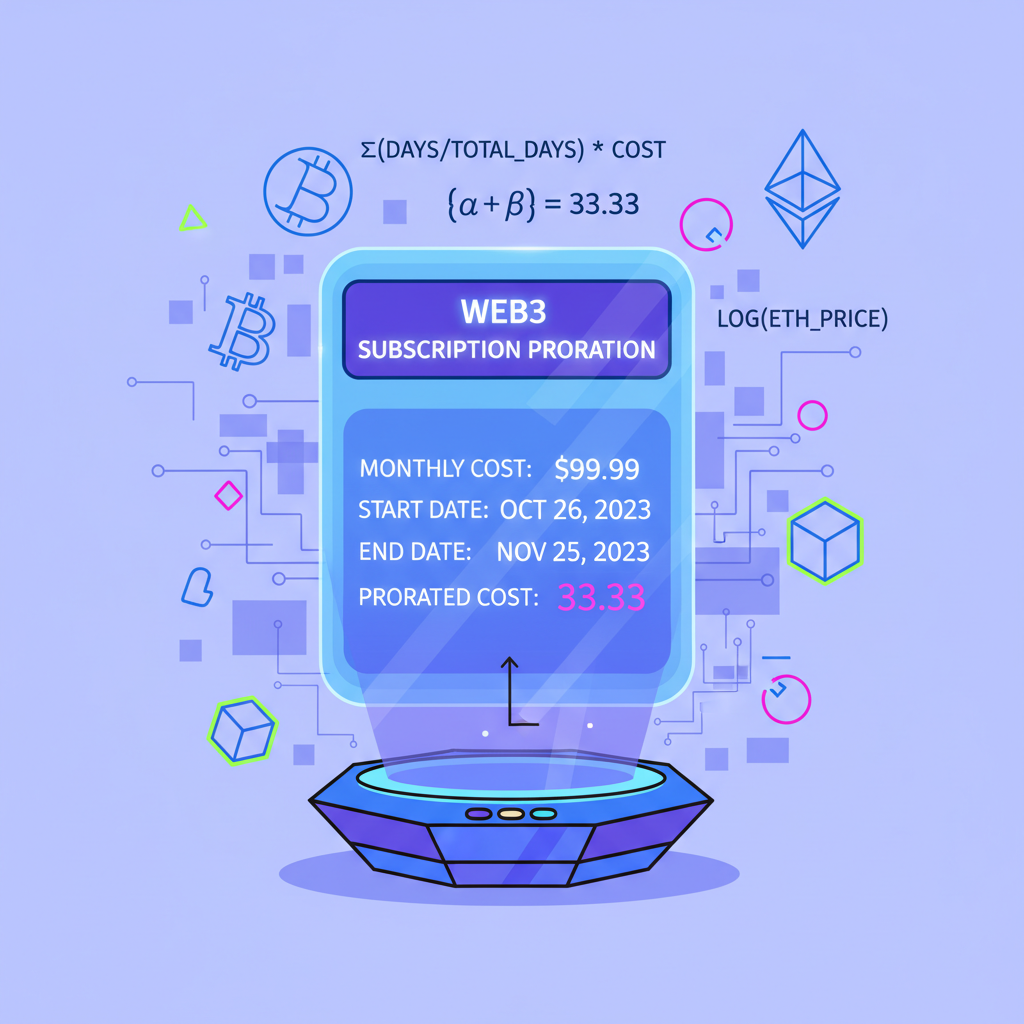


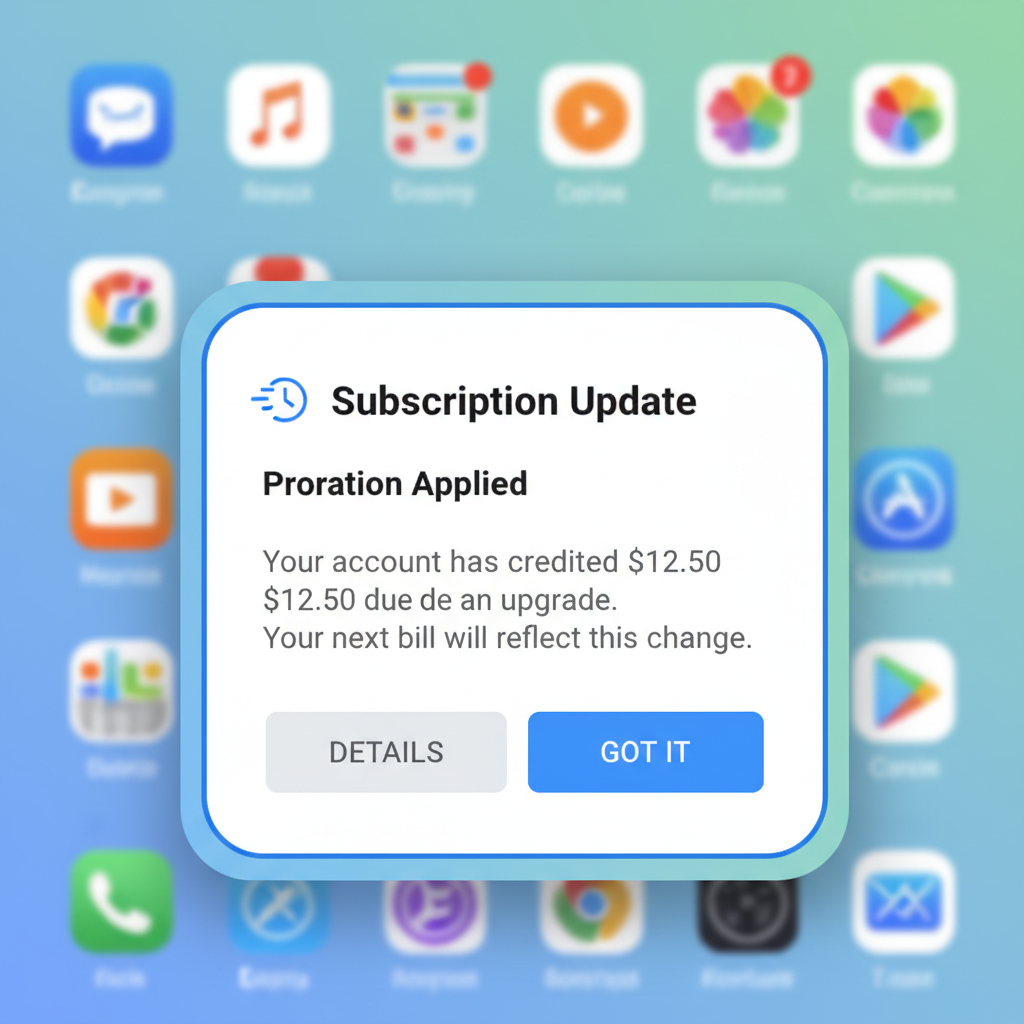
Once deployed, these contracts shine in handling edge cases, like multi-chain subscriptions or variable-length cycles. Developers on Base or EVM-compatible chains report 90% reductions in support tickets after integration, per community forums. It's not merely billing; it's a loyalty engine disguised as code.
Let's peek under the hood with a simplified Solidity example. This snippet captures the essence: timestamp tracking, ratio calculation, and seamless credit transfer.
On-Chain Proration Function
When a subscriber changes plans mid-cycle, fair billing requires prorating the old plan's fee based on time used and crediting the unused portion toward the new plan. Our Solidity function does exactly this: it computes the precise fraction of the cycle elapsed, calculates the credit for the remaining time, applies it to the user's account, updates the plan, and logs the event for auditability.
```solidity
function prorateSubscription(
    uint256 oldPlanId,
    uint256 newPlanId,
    uint256 cycleStart,
    uint256 cycleEnd
) external {
    require(block.timestamp >= cycleStart && block.timestamp < cycleEnd, "Invalid change time");

    // Calculate time used in the current cycle (in seconds for precision)
    uint256 timeUsed = block.timestamp - cycleStart;
    uint256 totalCycleTime = cycleEnd - cycleStart;

    // Proration fraction using 1e18 for precision (18 decimals)
    uint256 prorationFraction = (timeUsed * 1e18) / totalCycleTime;

    // Get old plan fee
    uint256 oldPlanFee = plans[oldPlanId].monthlyFee;

    // Calculate prorated credit (fee for unused portion? Wait, typically credit for unused)
    // Actually for mid-cycle change, credit = oldFee * (1 - usedFraction)
    uint256 unusedFraction = 1e18 - prorationFraction;
    uint256 credit = (oldPlanFee * unusedFraction) / 1e18;

    // Apply credit to user's balance
    userCredits[msg.sender] += credit;

    // Update user's plan to newPlanId (simplified)
    userPlans[msg.sender] = newPlanId;
    userCycleStarts[msg.sender] = block.timestamp;

    emit SubscriptionProrated(msg.sender, oldPlanId, newPlanId, credit, prorationFraction);
}
```
This approach ensures users aren't overcharged or under-credited during transitions. The use of fixed-point math with 1e18 scaling provides the precision Solidity lacks with native decimals, while the event enables off-chain indexing for dashboards and analytics.
Such code ensures onchain subscription adjustments are tamper-proof. Pair it with oracles for offchain signals if needed, though pure onchain keeps it decentralized. Tools from Polygon Labs enable agent-driven payments, where AI autonomously prorates based on usage metrics.
High gas fees once killed recurring dreams, but layer-2 scaling has flipped the narrative. Now, prorated billing costs pennies, not dollars.
Challenges persist, of course. User wallet signing for every micro-adjustment? Off-putting. Solution: subscription managers like those in Request Network, which batch approvals and notify via APIs. Reddit devs share war stories of crypto refunds, but onchain proration sidesteps them entirely - no chargebacks in an immutable ledger.
Edge Cases Mastered: Cancellations, Trials, and More
Proration extends beyond upgrades. Trial periods? Prorate into paid seamlessly. Cancellations mid-cycle? Instant refunds for unused time, boosting goodwill. For SaaS with tiered storage or compute, usage-based proration layers on top, blending fixed and variable fees flawlessly.
Take a decentralized analytics platform: users stake for access, but pivot plans quarterly. Onchain proration credits stakes proportionally, unlocking liquidity without disputes. This granularity draws power users, as Sphere Labs notes in their Medium deep-dive on true onchain subs.
Businesses win big too. Margins tighten without overcharges, churn drops 20-30% from fair billing, and transparency becomes a marketing hook. 'See your proration live on Etherscan' trumps vague Stripe dashboards. For setup specifics, explore this implementation guide or SubscribeOnChain's 2025 setup.
Looking ahead, as AI monetization layers evolve - think Stripe's split infra - Web3 leads with composable proration. Non-custodial agents on Polygon settle invoices autonomously, prorating in real-time. Web3 Enabler's flexible cycles pair perfectly, proving crypto subs aren't just viable; they're superior.
The shift to recurring subscriptions blockchain isn't optional for competitive SaaS. It future-proofs revenue, aligns with user expectations of precision, and leverages blockchain's core strength: verifiable fairness. Platforms ignoring web3 billing proration risk obsolescence, while adopters like those on SubscribeOnChain capture the decentralized economy's full potential.




No comments yet. Be the first to share your thoughts!